Where we work
Blinds in East York
East York blinds and shades chosen by looking closely at the window you use. Start with the handle that catches, the edge that admits light or the control behind a chair. Bring that small problem to a free measure at home.
Blinds Company · Rated 4.8 out of 5 on Google
Free in-home measure · open 8am–9pm, 7 days
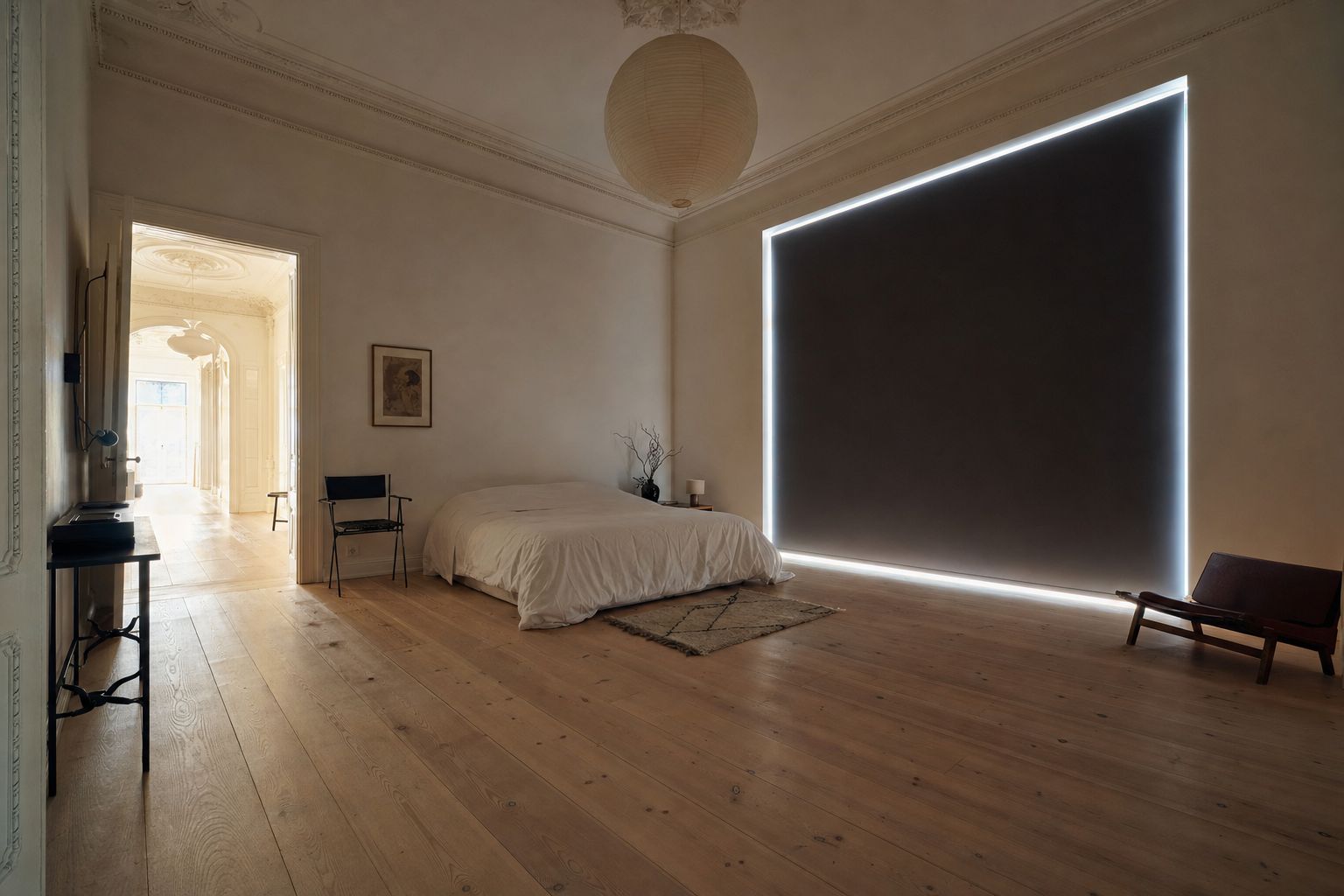
Room illustration, not a photograph of work in this city.
- The snag
- Name the ordinary action the old covering interrupts.
- The edge
- Fabric opacity and perimeter light need separate checks.
- The reach
- Include the chair or shelf between you and the window.
- The visit
- Fit and material can be discussed together at home.
In short
East York is included in the Toronto destinations we serve. The Blinds Company visit is free and covers measuring and discussing fabrics and fit. A useful replacement begins with the action your present covering makes difficult, then considers the material and appearance.
Inside this pageJump to one of 8 topics
Name the small action that has become annoying
An East York covering enquiry does not need to start with a large design brief. Begin with the ordinary action that your present window makes difficult. Perhaps turning the handle means raising the blind first. Perhaps the control has ended up behind a shelf. Perhaps a bright edge is the first thing you notice when trying to sleep.
One clear inconvenience provides a useful starting point.
Describe it as an action rather than a judgement about style. “I cannot reach it without moving the chair” says more than “the blind is wrong.” “The screen reflects this narrow strip of glass” says more than “too much sun.” These descriptions identify what the new arrangement must improve. They also make it easier to preserve the parts of the old covering that were useful.
Blinds Company offers home measuring in East York, Toronto. A free Blinds Company visit brings the measuring and material conversation into your room. Point out the working edges of your own window and any fixing requirements that apply to it. The opaque-shade photograph is an illustration of a surface and its edge gaps, not a record of a completed East York job.
Use the old covering as a demonstration
If the old blind is still fitted, show it in the positions that cause trouble. Lower it, raise it and open the pane as you normally would. A fitting issue can disappear from view when everything is closed neatly. Demonstrating the ordinary movement reveals where the bar, fabric or handle competes for space. That information is more useful than a photograph taken only in the best-looking position.
Also mention what worked well. You may like the way it kept the trim visible or the amount of daylight it allowed while partly lowered. A replacement should not solve one snag by removing another useful feature without discussion. The brief can contain both the improvement and the quality to keep. This helps the next choice feel like a response to your room rather than a generic upgrade.
The old dimensions are not automatically the new dimensions. A replacement mechanism may have different requirements, and a new mounting position may change the relevant width or drop. If frames or trim have been altered, that is another reason to assess the current opening directly. Treat the old blind as evidence of use and preference, while the free measure establishes the fitting information for the next arrangement.
Give the handle its full movement
A handle has a resting position, a turning position and sometimes a projecting path as the pane opens. Look at all of them. A covering can clear the handle when the window is shut and still interfere when the pane moves. Ask whether you want the blind to remain in place during ventilation or whether raising it is acceptable. That preference gives the mechanism comparison a practical goal.
The recess depth includes space already occupied by hardware. A fabric that looks thin does not tell you how deep its brackets or tube will be. Compare the full assembly with the opening and the surrounding surface. An inside fitting and an outside fitting have different relationships to the trim, overlap and movement. Neither should be promised as the answer before those relationships are understood.
For a glazed door, extend the same observation to the route through the room. Note the swing, adjacent wall and the direction from which you approach. A covering that moves with the door differs from one across the complete doorway. The patio-door page introduces those behaviours. Your demonstration supplies the actual geometry that a product label cannot.
Trace the light to its entry point
When light is the complaint, identify how it arrives. Does it pass through the material, show beside a rail or enter above the gathered fabric? A bright surface and a bright perimeter are different problems. Separating them stops the conversation from treating a new colour or another opaque cloth as the answer to every form of unwanted brightness.
For a sleeping room, describe the time you sleep and how much darkness you want. The image on this page deliberately shows light around a dark shade. It makes a useful point: opaque material alone does not define the whole window’s result. The mounting, overlap and available fixing surface contribute to the arrangement, and the fit should be discussed as carefully as the fabric.
In a workspace, the same edge can have another consequence by reflecting on a monitor. View it from the working seat instead of the doorway. You may need to alter a particular covered area while keeping useful daylight elsewhere. The blackout-blinds information explains surface opacity, while roller blinds introduce a simple height adjustment. The room’s actual light path decides which questions to pursue.
Include the furniture between you and the glass
A covering lives in a furnished room, and the furniture changes how you reach it. A desk, chair or shelf can make one control side practical and the other awkward. Show the pieces that will stay during the visit. If you are planning a new layout, explain it before the control is fixed around a temporary arrangement. Easy everyday access should be part of the choice from the beginning.
Gathered fabric also needs space. Curtains move to the side, roman shades retain folded cloth above the opening and lifted slats create a stack. A compact room can accommodate any of these only if the relevant space works for the chosen arrangement. Consider the view, the doorway and the furniture together. The open position can be the one you see most often, so it deserves more than a passing glance.
Motorized options are available to discuss when they address a useful reach or adjustment problem. The proposed system’s power, features and later access still need confirmation. A remote-controlled movement is not a substitute for considering the physical installation. Do not assume that every connected function is included because the product name contains the word smart.
Keep property requirements separate from product preferences
If you rent, ask the property owner which fixing methods are permitted. If the building has appearance requirements, obtain the actual wording. Use the requirements that apply to your own property. Share them before the final choice so the fitting and outward-facing material can be considered against real requirements.
No-drill blinds are in the confirmed service range, but suitability remains a question for the particular frame and system. Avoiding holes is a preference with practical implications, not proof that one approach works everywhere. A product idea can be discussed while permission is being obtained, provided the two decisions are kept distinct.
Similarly, identify a radiator, heater or other heat source near the opening. Follow the relevant equipment and material instructions for clearance. This page supplies no universal safe distance or appliance approval. A shade also does not repair a damaged window seal. Describe comfort and window condition separately so a covering is chosen for its proper role rather than given a promise it cannot establish.
Include the edge you see from your usual position
From the pillow or the working chair
A narrow line beside a covering can be much more noticeable from a low viewpoint than while standing at the window. Look from the position in which it bothers you, and name the edge involved. If the concern is reflected light on a screen, use the screen in its usual position. A general request for a darker fabric can miss the path through which the light is reaching you.
With the opening in use
Return the window, furniture and door to the arrangement you use during the day. Check that the position you prefer for light control still lets you reach the handle or pass through the room. Where an extra layer is being considered, look at where it will gather and how you will move it. The darkest lowered appearance is only one of the positions you will live with.
Write these two observations together: where the light is noticed and what must remain easy to operate. They give the measure a specific problem to discuss without treating a product name as a complete answer. Your own viewing angle and the available fitting space can then be considered alongside the material, rather than inferred from a photograph of someone else’s bedroom.
Make the next conversation small and useful
Prepare a short note naming the snag, the feature to keep and any change planned around the opening. Add a wide photograph if it helps show access or a complicated shape. You do not need a full order or technical vocabulary before requesting the measure. The free visit covers measuring at your windows and discussing materials and fit with the room in view.
Blinds Company has 5+ years in business and is licensed and insured. Keep the materials and the mounting arrangement you discussed beside the proposal. Review the actual proposal and keep the agreed installation date in the written quote. An illustrative interior is useful for understanding a movement or a light gap; it is not evidence for those terms.
Use the free-measure request to name the East York opening and the daily action you want to improve. Starting small makes the decision concrete. The covering can then be judged by whether it leaves the handle usable, the control accessible and the room’s light comfortable, with an appearance that belongs in the home around it.
The rest of the range
Everything else we fit in East York
Winds onto a tube
Tilts to aim the light
Folds up out of the way
Slides across the opening
And the fitting itself
Before you call
Questions worth answering before you book.
Is an old blind useful information even if I dislike it?
Yes. It can demonstrate what catches, where the control is awkward or how much of the view the raised stack occupies. Those observations help define the improvement you want. Its dimensions should not automatically become the replacement specification, especially if the frame or mounting will change. Keep the old blind as evidence of behaviour, rather than as authority over the next fitting.
Why show furniture in a window photograph?
A close view of glass omits the route used to reach it. A chair, desk or shelf can determine the convenient control side and the room available for curtains to gather. Include enough of the room to explain those relationships. A photograph is a useful conversation aid; final sizing and suitability still need assessment at the actual opening.
What if a bright line remains beside an opaque shade?
That is a fitting question as well as a material question. Identify where the light enters and describe how much it bothers you. The mounting position and available overlap can be discussed with the frame in view. Changing to another opaque cloth alone may not address a perimeter gap. Do not interpret a blackout label as a promise that the whole opening will admit no light.
Can I choose an option without drilling into the frame?
No-drill blinds are among the services listed, but the particular frame must suit the selected system. If you rent or have building requirements, confirm permission separately. A preference to avoid holes does not establish that every opening supports the same fixing approach. Bring the frame details and any actual written restrictions to the discussion.
The last chapter
We bring the samples to your windows.
We come to you, measure at your own windows, and go through fabrics and fits together. The visit costs nothing.
$99 off when you order three or more blindsApplied to your written quote at the measure.
Rather just talk?(437) 782-5452Answered 8am–9pm, 7 days
Free in-home measure
What is the small daily snag at your East York window?
Answered 8am–9pm, 7 days.
Page last checked 1 October 2026.