Where we work
Blinds in Oakville
Oakville window coverings planned from the open position outward. Keep the part of the glass you value, make room for fabric to gather and decide what the room needs after sunset. The home measure costs nothing.
Blinds Company · Rated 4.8 out of 5 on Google
Free in-home measure · open 8am–9pm, 7 days
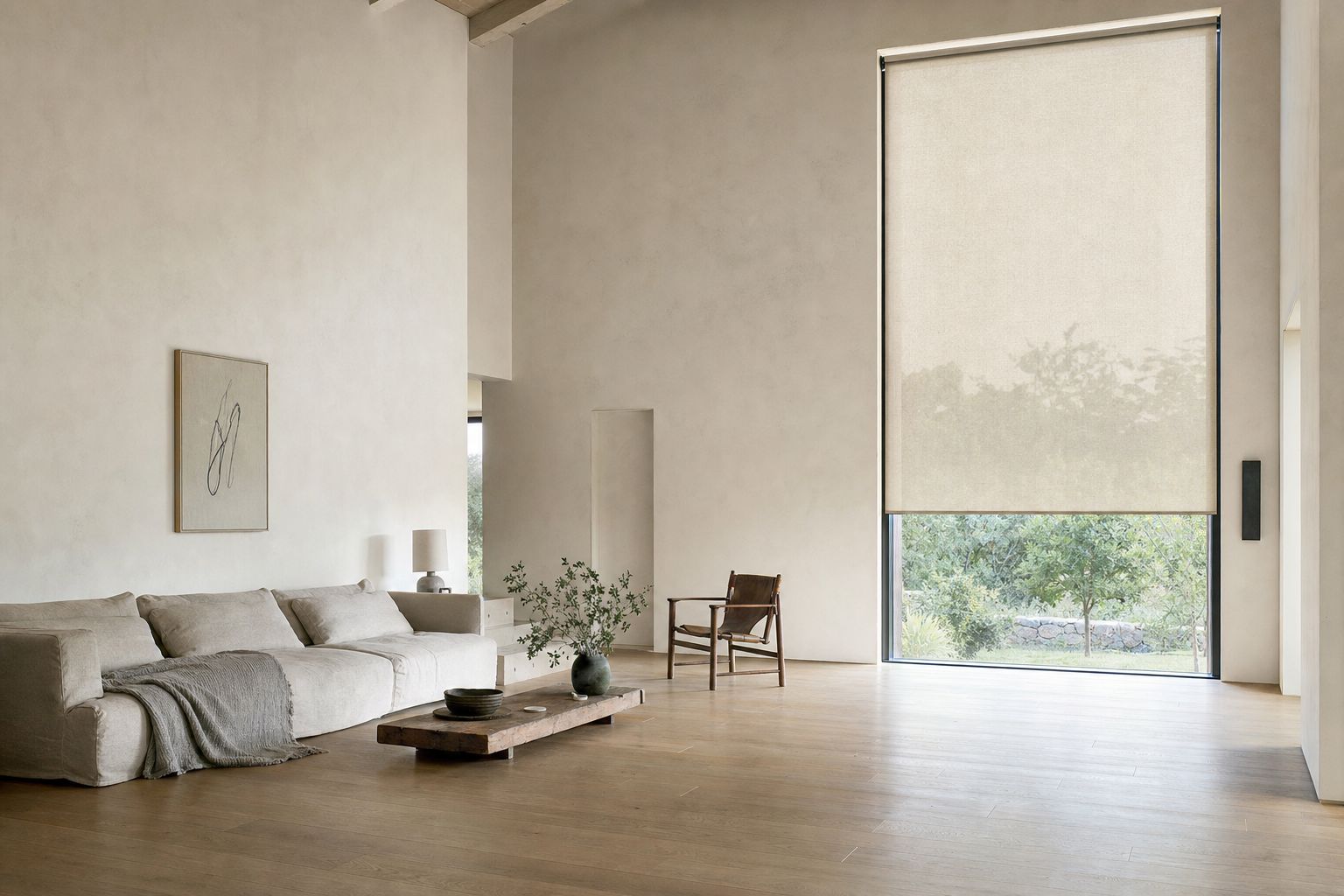
Room illustration, not a photograph of work in this city.
- Open first
- A raised covering still occupies space above or beside the glass.
- One passage
- The moving door sets a route the fabric must respect.
- Two lights
- Daylight and lamp-lit privacy are different tests.
- A free visit
- Discuss the materials beside the finishes you already live with.
In short
Our home-measuring service includes Oakville. During the free home visit, Blinds Company measures the openings and discusses materials and fit. A clear view, a usable door and evening screening can be planned as separate parts of the same room.
Inside this pageJump to one of 8 topics
Plan the window while nothing is covering it
For an Oakville room, a good first question is what should remain visible when the covering is open. You may want the entire view, the outline of an attractive frame or the upper glass that gives the room its brightness. Naming that feature provides a useful limit for the hardware and gathered fabric. It is a more concrete starting point than choosing a general style such as minimal or traditional.
Stand where you normally enjoy the room and trace the part of the opening you would be disappointed to lose. A tall window can have a clear upper edge that makes the room feel generous. A low sill can frame a view from a chair. A wall beside the glass can hold art or a switch that needs to remain accessible. Those features belong in the brief before a mechanism is chosen.
Home measuring with Blinds Company is available in Oakville. Blinds Company offers a free home measure to discuss materials and fitting where the covering will live. Follow the light from the glass to the places you use, and describe the view you hope to retain. The pictured roller room illustrates a product arrangement; it is not an installation record, a local customer’s room or a promise of the same result in every opening.
Decide where the open covering will live
Every moving covering has an open home. Roller cloth winds around a tube above the glass. Roman fabric gathers into folds. Raised slats form a stack. Curtains gather at the side, and a moving panel needs a place to park.
Compare those spaces with the feature you wanted to preserve. The open position can be the one you see most often, so it should not be a late detail.
The space above the window may be constrained by a ceiling or nearby structure. The side space may be constrained by a doorway, furniture or an adjacent opening. A generous fabric in a room photograph may depend on wall area you do not have. During the measure, show what must stay and explain whether the wall will change. That makes the difference between a pleasing picture and a workable arrangement explicit.
For two adjacent panes, independent coverings can create several open settings rather than one. A view-facing section might stay raised while another controls brightness near a table. Think about whether that flexibility is useful in your room or whether a single movement would feel simpler. The roman-shades page and roller-blinds page provide two ways to think about the upper gathering space.
Give the doorway a clear path
Before deciding how a glazed door should look when closed, walk through it. Follow the handle, the opening edge and the route a person takes. If the covering spans the whole doorway, how will it move before you pass? If it is fitted with the door, where does its hardware sit relative to the handle? The answer depends on the actual movement, not the name given to the room.
Think about a busy moment: carrying food outside, bringing shopping in or moving between spaces while a conversation continues. An adjustment that feels minor when demonstrated once can become a nuisance when repeated. Explain that traffic pattern at the appointment. It can favour a different arrangement from a similar door that is opened only occasionally.
The surrounding wall matters too. Open curtains may gather where a door needs to swing or where a light switch is used. A blind raised over the frame can still occupy space near the top of the opening. Include those interactions in the comparison. Our patio-door page introduces the access questions, but a wide view of your doorway and the room around it is the evidence that settles them.
Choose a daylight position before choosing a darkest position
It is easy to select a covering by imagining the strongest sun or the greatest need for privacy. Those moments matter, but the room may spend much more time in an intermediate state. Decide what daylight you would like during the hours you use it most. You might want a softened view for reading, clear glass while eating or a small shaded area near a work surface.
Material openness, colour and the amount of glass covered all contribute to that state. A pale fabric is not automatically transparent, and an open weave is not automatically appropriate for privacy. Compare what the actual sample does at the glass rather than relying on a colour name. The free visit is a place to connect the fabric’s behaviour to the positions you expect to use.
Also think about adjustment effort. If your ideal setting changes often, a reachable control and a simple movement can be more valuable than a rarely used visual effect. Motorized options can be discussed when they serve a real need, but the chosen system’s power, access and control features require confirmation. A product should make the room easier to use without relying on assumed compatibility.
Review the room again after the lights come on
Evening privacy is a separate test from a pleasant daytime view. The outside becomes darker while lamps make the interior brighter. An open fabric can therefore feel different from the way it appeared at noon. Consider the actual lighting arrangement: a lamp beside the window, a dining light over the table or a television with the rest of the room dimmed.
If a second layer is useful, define its job. One layer might moderate daytime brightness while another closes the room visually in the evening. Curtains and drapery are part of the confirmed service range, so they can be considered with a blind rather than added as an afterthought. They still need side space, appropriate fixing and a clear travel path. More fabric is not automatically a better solution.
In a sleeping room, light coming around the edges deserves its own discussion. The material can be opaque while the gap beside it remains bright. Describe the darkness you want instead of treating the word blackout as a guarantee about the entire opening. The fitting arrangement and the fabric choice must be considered together, with the frame and surrounding surfaces in view.
Preserve the room’s small conveniences
Window coverings can affect details that are easy to miss in a broad design conversation. A switch beside the glass, a shelf used daily or the place where a chair pulls back can become obstructed by gathered fabric. Walk through those ordinary actions before selecting the final arrangement. The aim is not only a balanced wall but a room whose familiar conveniences still work.
If the home is being redecorated, identify the final positions of furniture and controls where possible. A rail fixed for a temporary layout may be awkward once a cabinet is installed. New trim can also change the relevant dimensions. Bring the planned changes into the appointment and distinguish firm decisions from ideas still being considered. The measuring conversation should not silently turn a provisional surface into a permanent one.
For a building with appearance or access requirements, obtain the written information before final selection. No Oakville-wide building policy is assumed on this page. A particular property may have rules affecting the outward-facing surface, mounting or entry arrangements, and those rules should be discussed as actual requirements. We do not fill a missing rule with a convenient promise.
Walk the light path before changing the room
Look from the occupied side
Stand at the glass, then return to the chair or counter where you actually notice the light. The two positions can tell different stories. A bright section near a frame may be barely visible at the window yet dominate the view from a low seat. Point out that relationship rather than describing the whole opening as too sunny. It helps focus the material conversation on the light you need to manage.
Keep a route through the day
Think about what happens next: walking past the table, opening a door or sitting down to read. A covering that moves across a route can become an interruption even when its lowered surface is appealing. Compare its useful positions with those ordinary movements. Include the space needed by fabric when it gathers and by any part you operate by hand.
If you are planning furniture changes, mark their intended position in a simple sketch. You do not need a finished floor plan or precise product measurements. The sketch just keeps the view, the moving covering and your path through the room in one conversation. That makes the free measure a chance to compare a complete daily arrangement rather than a fabric sample detached from its setting.
Finish with a brief that describes both positions
A useful final brief says what happens when the covering is open and what happens when it is closed. The view remains available, the door keeps its route, daytime brightness is manageable and the lamps do not make the room feel exposed. Each of those is a practical goal. They allow the material and mechanism to be judged together rather than treating a beautiful swatch as the whole decision.
Blinds Company is licensed and insured and has 5+ years in business. The in-home measure is free. Compare the fabric and movement you chose with the work described in your proposal. The agreed installation date belongs in the written quote for the actual work. Keep the decisions tied to your own openings and the proposal you receive.
You can ask for the free visit with the product choice still undecided. Name the Oakville room and the feature you most want to preserve. A description of the open view and the closed requirement is enough to begin a focused conversation. The covering can then be chosen as something that belongs in the room in every useful position, rather than only when everything is closed for a photograph.
The rest of the range
Everything else we fit in Oakville
Winds onto a tube
Tilts to aim the light
Folds up out of the way
Slides across the opening
And the fitting itself
Before you call
Questions worth answering before you book.
Why choose the open position before the fabric?
Open fabric and hardware still occupy part of a window or the wall around it. If the view is the feature you most value, decide where a raised blind or gathered curtain may sit without spoiling it. The material choice then has a clear space to work within. This avoids selecting a beautiful cloth before discovering that its open stack covers the part of the glass you wanted to keep clear.
Does a light fabric always make the room brighter?
Colour alone does not answer that. The weave, opacity and covered area influence how much daylight reaches the room. A pale opaque material can block light, while another pale material filters it. Compare the actual sample against the window and consider the position in which you will use it. The visual softness of a photograph is not a measure of the fabric's light transmission.
What if the curtain stack would cover a wall switch?
Treat the switch as part of the fitting space and show it during the visit. The open stack and its travel need to leave ordinary controls accessible. A different fixing position, amount of side space or type of covering may be worth considering. Do not rely on moving the fabric aside every time; the final arrangement should fit the way you use the room, including its small everyday controls.
Should the blind follow the door or the surrounding frame?
Decide from the door's travel, the handle clearance and the access you want while the covering is closed. A treatment across the larger opening and one fitted to the door behave differently. Demonstrating the door during the measure makes those differences clear. Neither approach is selected solely because a room is called a patio room or because a similar-looking installation appears in a picture.
The last chapter
We bring the samples to your windows.
We come to you, measure at your own windows, and go through fabrics and fits together. The visit costs nothing.
$99 off when you order three or more blindsApplied to your written quote at the measure.
Rather just talk?(437) 782-5452Answered 8am–9pm, 7 days
Free in-home measure
Where should the fabric go when your Oakville window is open?
Answered 8am–9pm, 7 days.
Page last checked 1 October 2026.