The range
Roman shades
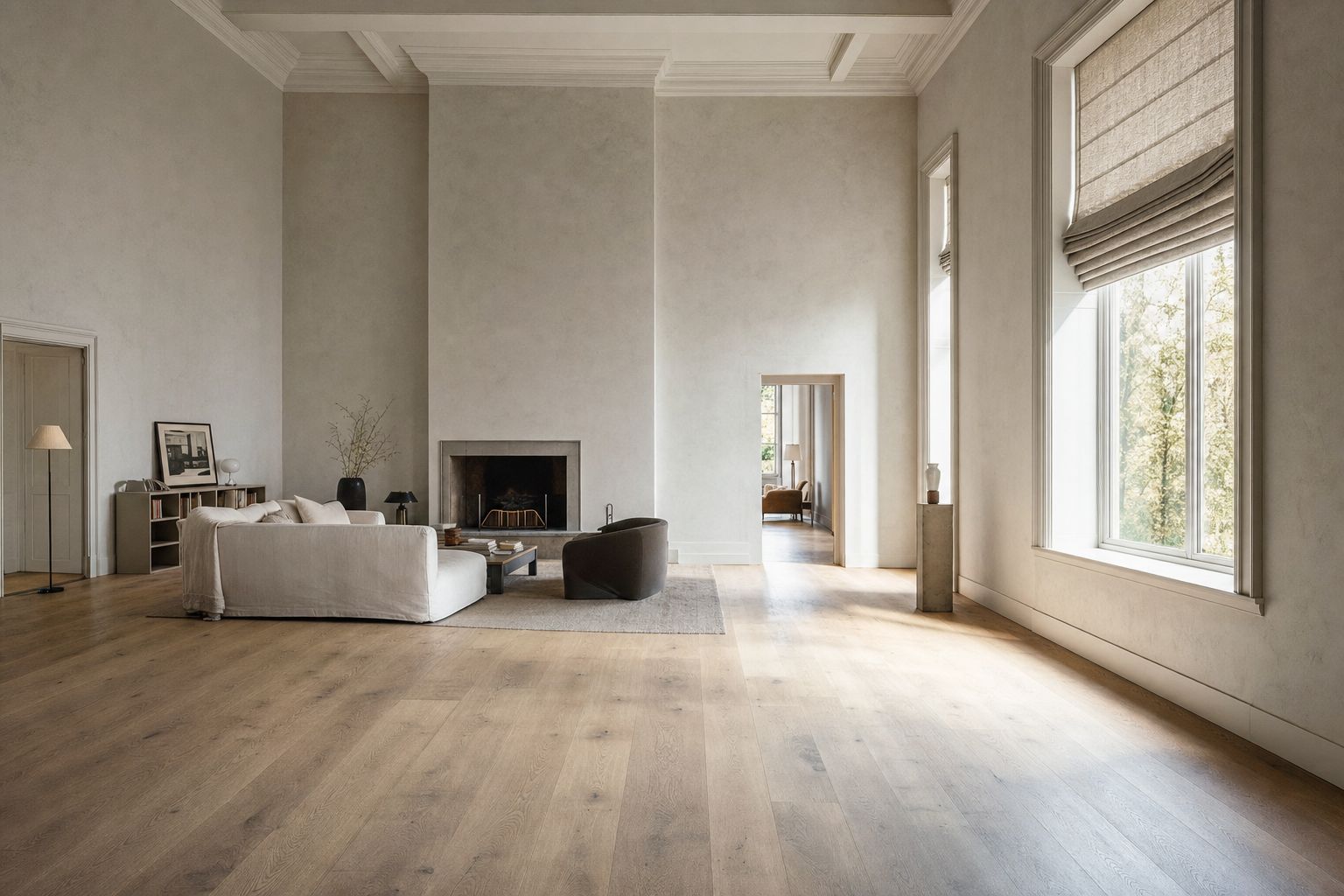
A roman shade is fabric behaving like tailoring — flat and composed when lowered, gathered into deep horizontal folds as it rises — so the window ends up dressed rather than merely covered, which is a different ambition from any blind in this catalogue.
Blinds Company · Rated 4.8 out of 5 on Google
Free in-home measure · open 8am–9pm, 7 days
- Folds, never winds
- The cloth gathers into stacked horizontal pleats as it rises, so the window reads as fabric rather than as hardware.
- Drapery-weight cloth
- Linens, heavy cottons and textures with real hand — cloths no tube could wind flat.
- The lining does the work
- One fabric runs from unlined glow through standard lining to a full blackout lining, and the face stays the same.
- The stack stays at the head
- A raised roman keeps a band of folds over the top of the glass, which is why we mount above the frame where daylight is tight.
In short
A roman shade raises by gathering its cloth into stacked horizontal folds instead of winding it onto a tube, which is why it reads as furnishing rather than hardware — the product a room reaches for when the window should contribute softness and texture, not machinery.
Inside this pageJump to one of 7 topics
Fabric that folds instead of rolls
Behind a roman shade’s calm face is a simple piece of rigging: vertical tapes or cords run up the back of the cloth, and raising the shade draws the bottom edge upward so the fabric gathers into horizontal pleats, each fold settling onto the one beneath it. Lower it and the pleats pay out until the panel hangs flat. That is the whole machine — no tube, no slats, nothing to wind.
The consequence is aesthetic rather than mechanical. Because nothing is wrapped or trimmed to a cylinder, a roman can carry real cloth — linen weaves, heavy cottons, textures with actual hand — and the fold structure gives even a plain fabric depth and shadow that a flat panel cannot have. Styles vary from tailored fronts that hang crisp and architectural to softer builds where each fold keeps a gentle curve; both come from the same rigging, dressed differently.
The hour this product owns
There is a reason romans keep ending up in west-facing living rooms. The last hour of sun arrives low and level, under the reach of most coverings or straight through them, and it needs a precise answer: block that band of sky, keep the rest of the evening. A roman drops to whatever height you choose and holds there — lowered a hand’s width past the glare and no further — so the room keeps its light and loses the dazzle.
The other hour it owns is later. After dark, when glass turns black and hard, a lowered roman replaces the coldest surface in the room with cloth. It is a small change that rooms feel more than they can explain, and it is most of why bedrooms and reading corners suit this product so well.
The lining does the quiet work
Two shades in identical fabric can behave like different products, and the difference is sewn inside.
Unlined, a roman is at its most casual — sunlight comes through the cloth itself, the weave shows, and the window glows like a lampshade. Lovely in the right room; short-lived in strong sun, which fades and tires exposed fabric faster.
A standard lining gives the shade body, protects the face fabric from UV, makes the folds hang heavier and more deliberate, and turns the daytime glow into gentle shade.
A blackout lining closes the cloth entirely for the rooms that sleep, while the room-side face stays pure fabric — the tailored look, with night behind it.
Which lining a window wants depends on its compass direction and its job, and it is decided fabric-in-hand at the measure, where the actual afternoon is available for testing.
The raised stack belongs in the measurement
A roman never disappears. Every centimetre of cloth in the drop has to gather at the head when the shade rises, and heavier face fabrics or generous folds make a deeper stack. That presence can be handsome — a soft valance left over the glass — or it can steal the top of a view and make a short window feel shorter. The difference is planned before the fabric is cut.
An outside mount can park more of the stack above the opening when wall space allows, returning the glass at full height. An inside mount keeps the room cleaner and the hardware contained, but asks the recess to hold both the rail and the folded cloth without touching a handle. On adjacent windows, all stacks should finish at the same line even when their drops differ, or the room reads the mismatch immediately.
This is why the sample is folded, not merely held flat. The buyer needs to see the cloth as a panel when lowered and as an object when raised; both states live in the room every day.
The cord question, answered before it is asked
Any lifted shade has to be lifted by something, and for decades that something was a cord — which is also the one component of a window covering that can genuinely hurt a child. Canadian regulation has tightly restricted reachable cords since 2021, and our own rule is simpler than the regulation: where a child sleeps or plays, the shade is cordless, spring or motor, as the default and at no extra charge. Nobody has to remember to ask. The lift a hand or a motor provides is not a compromise, either — it is the version most adults prefer once they have lived with it.
Where it is the wrong answer
Honesty about this product means naming the rooms it should not go in. Kitchens and bathrooms are the big two — humidity and tailored cloth make a slow, losing bargain. Doors are the third: a shade must fully rise for every pass-through, and fabric asked to do that several times an hour lives its life bunched at the top. The fourth is the genuinely dark bedroom, where a lined roman gets close but a purpose-built blackout blind gets there.
And where the true wish is wall-to-wall softness — fabric from ceiling to floor, the full theatre of it — the honest answer is curtains, which we also make. A roman is the tailored middle path: more fabric than a blind, less commitment than drapery.
What it asks you to accept
The stack, chiefly — a raised roman keeps some presence at the head of the window, and a buyer who wants their covering to vanish entirely will be happier with a roller disappearing into a cassette. A slower hand, too: the fold wants a smooth, deliberate lift, not a snap. And fabric’s own nature — cloth lives, relaxes minutely with seasons and humidity, and never has the machined uniformity of a slat or a screen. The people who choose romans tend to count that last one as the point.
The mechanism
Roman shades, part by part
Gathers into folds as it rises — reads as fabric, never as mechanism
Takes drapery-weight and textured cloths a roller cannot carry
Lining choices from unlined glow through full blackout lining
Cordless lift as the default in any room a child uses, at no extra charge
Hour by hour
The same window, four times over
7am
Morning belongs to the lining rather than the fabric. Unlined, the whole panel becomes a lampshade and the room wakes gradually through the weave; with a blackout lining sewn in, the same cloth in the same colour keeps the room shut until somebody decides otherwise. Two shades identical from the doorway, behaving like different products before breakfast.
Noon
Midday is when the stack has to be argued about. The folds have to go somewhere, and where they go is a band at the head of the window — on a short, wide opening that band takes a real slice of the best light of the day. Mounted above the frame instead of inside it, the shade parks over trim and hands the daylight back.
6pm
The hour this product owns. Late western sun arrives almost level, under a raised blind entirely and through a half-lowered one straight into the room, and the answer here is height rather than fabric: a roman stops wherever you leave it. Lowered a hand's width past the glare and no further, the evening keeps its light and loses the dazzle.
After dark
Glass turns black and hard, and a lowered roman replaces the coldest surface in the room with cloth — most of why bedrooms and reading corners suit this product. What it does not do is seal: a shade hangs with small clearances around it and those clearances glow at dawn, so a room that must be genuinely dark wants a blackout blind doing the night shift behind it.
Where it belongs
Rooms roman shades answer well
Living and dining rooms where the window should be furnished, not just managed
Bedrooms that want the last thing seen at night to be cloth, not plastic
Character houses whose trim and mouldings deserve a soft neighbour
In the room
How the choice changes the room
The rest of the range
Everything else, by how it moves
Winds onto a tube
Tilts to aim the light
Folds up out of the way
Slides across the opening
And the fitting itself
Our commitment
We measure it. If it does not fit, we remake it.
The visit is free. See the samples at your own window, get the quote, then decide.
Before you call
Questions worth answering before you book.
Do roman shades block light as well as a blackout blind?
With a blackout lining sewn in, the fabric itself stops essentially everything — the cloth is no longer the weak point. The perimeter still is: a shade hangs inside or over an opening with small clearances around it, and at dawn those clearances glow. For a living room or dining room that simply wants evenings to feel enclosed, a lined roman is ample. For a bedroom that must be genuinely dark at six in the morning, the honest engineering answer is a [blackout roller](/blackout-blinds/) with its edges properly closed — and if you love the roman look, the two can share the window, the roller doing the night work behind the fabric that does the daytime charm.
What is the difference between corded and cordless, and which should I pick?
A corded roman lifts on an operating cord; a cordless one lifts by hand on a spring-assisted mechanism or by motor, with nothing hanging. In any room a child sleeps or plays in, this is not a style decision and we do not treat it as one — cordless is our default there, at no extra charge, because a reachable loop of cord is the entire hazard and removing it outright beats supervising it. Canada has regulated corded window coverings strictly since 2021 for exactly this reason. For rooms adults keep, either works; the cordless lift is simply the nicer thing to live with, and most people who try it stop asking about cords.
How much of the window does the raised shade cover?
This is the trait to understand before you buy, not after. The folds have to go somewhere, and where they go is a stack at the head of the window — so a fully raised roman still occupies the top portion of the glass. On a tall window the stack is a small tax; on a short, wide one it can shade a meaningful slice of the daylight. The mitigation is mounting: fix the shade to the wall above the opening and the stack sits over trim and drywall instead of glass, buying the light back. It is one of the first things we look at when we measure.
Can a roman shade be motorized?
Yes — a quiet battery motor takes over the lift, and the shade rises with its folds gathering exactly as they would by hand. It suits the places romans tend to hang: over a deep sill you would rather not lean across, behind a sofa, on the tall front window that gets adjusted every evening at the same hour. And because a motor is also a cordless drive, it doubles as the child-safety answer in a bedroom.
Are roman shades a good idea in a kitchen or bathroom?
We tend to counsel against it, gently. Steam and cooking air are hard neighbours for tailored fabric — cloth that hangs in humidity every day relaxes, waves and holds smells in a way the same cloth in a dining room never will. A [roller](/roller-blinds/) in a wipeable fabric does those rooms' jobs with less to regret. If a kitchen window is far from the stove and the heart wants fabric, it can work — but we would rather say the true thing at the measure than replace a disappointed shade in two years.
Should I choose a roman shade or curtains?
They are cousins doing different work. A curtain frames the whole opening, floor to ceiling at its best, and brings the most fabric a window can carry; a roman lives within or just over the frame, drops to any height you like, and keeps the sill and the floor clear. Small rooms and windows above furniture usually argue for the roman; grand openings and draughty old walls argue for curtains. We make and fit both — which means the recommendation at your window can be honest, because either answer is our work.
How do I look after one?
Lightly and regularly beats rarely and heroically. A vacuum with a brush head on low, along the folds, keeps dust from settling in; a barely damp cloth lifts the occasional mark. What tailored shades do not forgive is saturation — soaking distorts the structure that makes the folds fold — so anything beyond spot care is a job for a cleaning service that handles fitted window fabric, not a washing machine.
The last chapter
We bring the samples to your windows.
We come to you, measure at your own windows, and go through fabrics and fits together. The visit costs nothing.
$99 off when you order three or more blindsApplied to your written quote at the measure.
Rather just talk?(437) 782-5452Answered 8am–9pm, 7 days
Free in-home measure
Torn between a roman shade and curtains for that window?
Answered 8am–9pm, 7 days.
Page last checked 6 September 2026.