Where we work
Blinds in Thornhill
Thornhill blinds and shades for rooms in the middle of a change. Keep the fabric conversation moving while trim, furniture or colour decisions are unfinished, and confirm the fit against the opening that will stay.
Blinds Company · Rated 4.8 out of 5 on Google
Free in-home measure · open 8am–9pm, 7 days
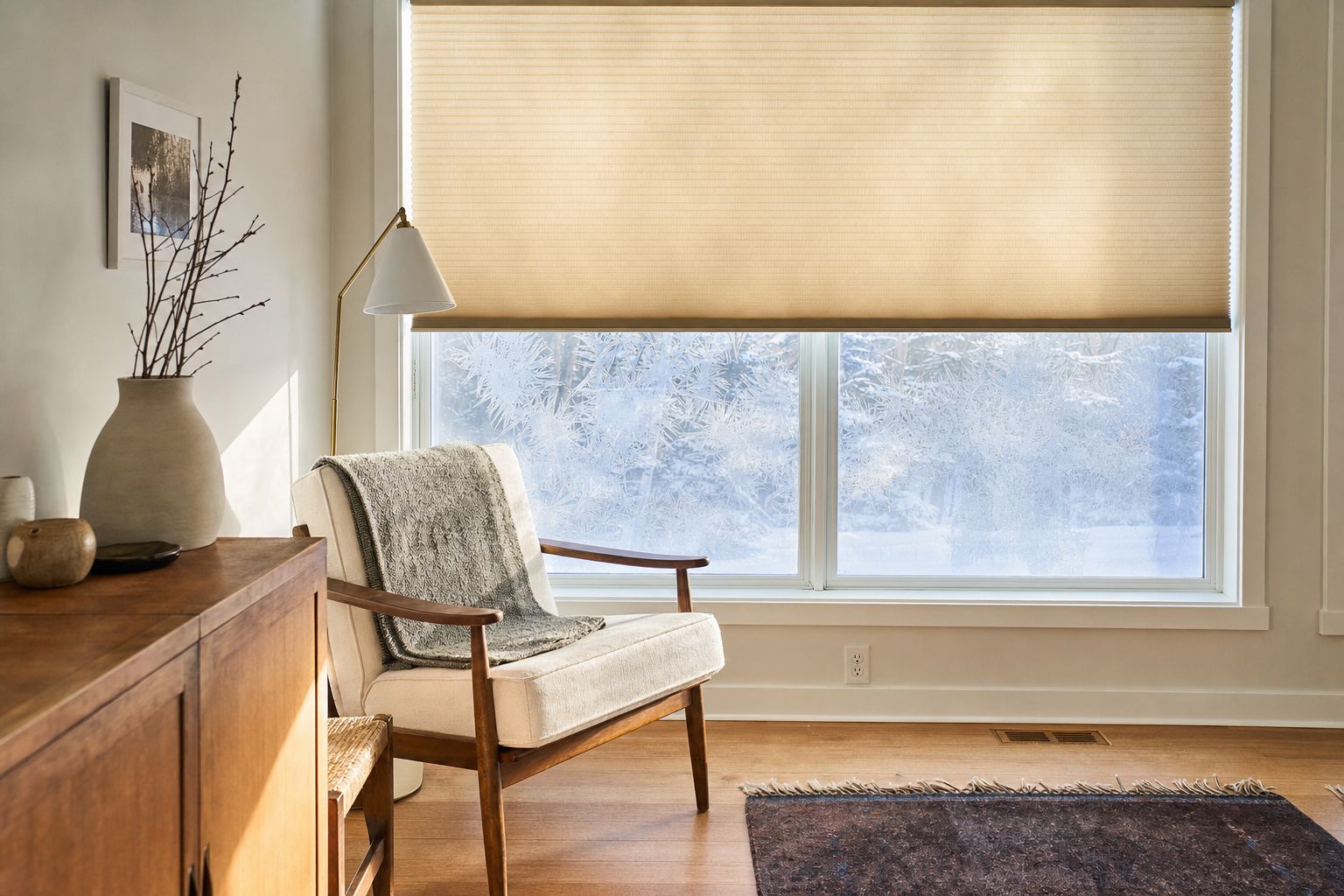
Room illustration, not a photograph of work in this city.
- Final surfaces
- New trim can change the space available for a covering.
- Stable colours
- Use the finishes you plan to keep as the sample reference.
- Clear sequence
- A material preference and a finished size are separate decisions.
- Home measure
- The window and its surrounding room can be discussed together.
In short
Blinds Company serves Thornhill and offers a free measure in your home. The visit connects your material preferences with the actual window fit. If the room is changing, explain the sequence so provisional ideas and final dimensions are kept clear.
Inside this pageJump to one of 8 topics
Sort the decisions by what can still change
A Thornhill room being redecorated can make a covering choice feel premature. The walls are unfinished, the old blind is still hanging and the furniture plan may exist only as a sketch. You do not have to treat all of those uncertainties as one obstacle. Sort the decisions into stable features, likely changes and matters that must be confirmed before the fit is final.
A floor you will keep can already guide colour. A window scheduled for replacement cannot yet provide a dependable final recess. A new sofa may change the easiest side from which to reach a control. Those are three different kinds of information. Keeping them separate lets the conversation begin usefully without turning a provisional idea into an order dimension.
Blinds Company offers home measuring in Thornhill. Blinds Company provides a free in-home measure, with fabrics and fits discussed at your windows. If your room is changing, identify the surfaces that will remain and the decisions that are still open. The cellular-shade image is illustrative, not a photograph of a local customer’s finished work.
Use the opening that will remain
When frames or trim are changing, an existing covering can show a problem without supplying the next product’s dimensions. Perhaps its rail sits too far forward, or its fabric touches a handle. Keep those observations; they explain what should improve. Do not assume that the old width is correct for the new arrangement merely because the glass seems similar from across the room.
Trim has depth as well as appearance. A new edge can reduce the available space inside the reveal or change where an outside-mounted covering would sit. A sill can project into the path of fabric or a bottom bar. The final fixing surface also needs to be understood. Explain those changes during the measure rather than discussing only the colour of the frame.
If the exact sequence is not settled, say which work is planned and which contractor decisions remain open. You can compare material preferences while recognising that a relevant dimension needs confirmation after the opening is complete. That is a practical distinction, not a delay for its own sake. The final fit should belong to the finished window, rather than to the convenient measurement taken at an earlier stage.
Build the colour conversation around a stable reference
Choose one room finish that will stay and compare materials against it. Flooring, permanent trim or an established large piece of furniture can provide a clear reference. A small object selected for a temporary scheme can be misleading if it is the only colour beside a sample. The covering will be a large surface at the window, often with daylight passing through or around it.
Also separate the colour you see from the degree of filtering. A pale opaque fabric and a pale open weave can belong to a similar palette while giving very different light and privacy. Their textures can read differently when backlit. Compare the actual surfaces instead of assuming that a shared label means a shared appearance in use.
If adjoining rooms should feel related, decide how strong that relationship needs to be. You may want the same outward-facing tone, a repeated texture or only a compatible family of colours. Naming the goal allows the bedroom and the work area to choose different opacity where needed. A considered match does not require one material to compromise two rooms with different jobs.
Preserve useful differences between the rooms
A refreshed room and a room you are leaving alone can meet in the same sightline. It is tempting to solve that by copying one covering everywhere. Instead, inspect what each opening asks of it. One recess may be deep and another shallow. One pane may open beside projecting hardware while another is fixed.
These differences are fitting information, even if the rooms share a decorative scheme.
Think about the movement you prefer in each space. Slats provide angle adjustment, a roller changes its covered height, and roman folds bring a different fabric shape above the glass. Curtains move fabric to the sides. The shape visible when the covering is open can connect rooms or deliberately let them differ. This is worth deciding before trying to match only the lowered surfaces.
The types-of-blinds guide introduces the main behaviours, while the individual product pages explain their uses. Use that information to ask better questions, not to force a result from a city label. Your Thornhill address tells us the destination is served. The depth, hardware and use of each window decide which movement deserves consideration.
Place the control for the future routine
If the room layout is changing, stand where the final chair, desk or cabinet will be and consider how you would adjust the covering. A reachable side today may end up behind a tall piece of furniture. A curtain stack may occupy the place you want to walk through. These conflicts can be easy to miss while the room is empty, because every possible route looks available.
A sketch with approximate furniture positions can help explain the plan. It need not become a technical drawing. Show the side from which you naturally approach the opening and any surface that must remain clear.
For a desk, consider the reflection on the actual screen position. For a reading chair, consider the light at seated eye level. Those uses give control and opacity a shared purpose.
Motorized and smart home blinds are included in the company’s service list. If that approach would help, discuss the particular system’s power and control arrangement. Do not assume that the word smart settles compatibility with equipment you already own. A useful control choice is one whose daily use and later access are understood, not one selected solely because the room is being updated.
Judge comfort without making a window-repair promise
If a room feels cold or bright, distinguish the condition of the window from the job of the covering. A damaged seal, unsuitable frame or moisture issue is not repaired by choosing a shade. You can discuss how a material affects the room’s light and the feeling near the glass without promising a quantified improvement in heating cost or a repair to the opening itself.
Cellular shades have a pleated structure with air pockets, which is a useful material characteristic to compare. This page assigns no energy-saving percentage to a Thornhill home. The cellular-shades page explains the product, while the appointment connects that information to your frame and use. An attractive feature should not become a claim about every building or every season.
For a sleeping room, consider the routes by which light enters. The cloth and its perimeter have different roles. If brightness at the edge is the main problem, discuss overlap and mounting along with opacity. If privacy after dark is the concern, describe the room with its lights on. These concrete observations make comfort a usable brief rather than a vague promise attached to a fabric name.
Label decisions that are ready and decisions that can wait
Keep a small finish record
Place the paint reference, a fabric you plan to retain and a photograph of the fixed trim together. The record can be very simple. Its value is that it shows which surroundings the new covering must relate to. If a photograph changes the colour noticeably, use the actual sample for the comparison in the room. Look at a fabric with light behind it as well as laid against the furniture.
Name the unfinished surface
An opening that still needs trim, a handle or a final wall finish should be marked as unfinished. Explain what will change instead of expecting a measurement taken now to describe a surface that has not been fitted. The colour discussion and the final dimensions may have different starting points. Keeping those choices separate can preserve useful progress without pretending every part of the opening is settled.
When the room is ready, bring the record back to the window and check it from your usual viewing position. Ask whether the arrangement you preferred still makes sense beside the completed surfaces. This final look is about the room itself: its light, its clearances and the materials that remained. It keeps the specification connected to the setting you will live with.
Write down what must be confirmed before agreement
At the end of the discussion, collect the remaining decisions in plain words. Is the frame finished? Is the furniture position dependable? Has the material been compared in the room? Are any building requirements still missing?
This short list keeps the choice honest while the project moves. It also prevents an unresolved preference from being mistaken for a confirmed fitting detail.
Blinds Company has 5+ years in business and is licensed and insured. Measuring and discussing fabrics at home is free. Keep your fabric selection beside the proposal so the room decision and the agreed work remain connected. Review the proposal for your actual openings, with the installation date confirmed in writing at the quote. A room study illustrates a decision; it does not establish operational terms for your project.
You can request a measure while some decoration choices are still open. Describe the Thornhill room, the parts you are keeping and the changes that affect the window. That is enough to start. The aim is a covering selected for the room you will live in when the work is finished, with its material, movement and fit understood at the right stage.
The rest of the range
Everything else we fit in Thornhill
Winds onto a tube
Tilts to aim the light
Folds up out of the way
Slides across the opening
And the fitting itself
Before you call
Questions worth answering before you book.
Can the conversation begin before decorating is finished?
Yes. Describe what is final, what will change and which part of the covering you are considering. Materials and appearance can be discussed without pretending an unfinished opening has final dimensions. If work will alter the frame, trim or fixing surface, make that clear before relying on a measurement. A useful sequence is better than carrying an old dimension forward simply because it is already available.
What is a dependable reference for choosing a neutral fabric?
A finish you expect to keep is a stronger reference than a temporary decorative item. Consider the floor, frame colour or an established wall finish, then view the sample with the room's daylight behind it. Neutral does not mean identical in every setting. The material's texture and opacity can change its appearance even when two colour names sound alike.
Must the older room and the new room use one mechanism?
A visual connection can come from colour, texture or a shared alignment rather than identical movement. Assess the actual windows separately, especially if their depths or hardware differ. Decide which visible feature should connect the rooms and allow the fitting to follow each opening. That is more practical than forcing a matching product into a recess that does not suit it.
Should I postpone every decision until the new furniture arrives?
Not every decision depends on furniture, but control access and fabric travel can. Share the planned layout and identify what is still uncertain. A preference for cloth or colour can remain useful while the control side is being discussed. Avoid fixing that side around a temporary cabinet if the final arrangement will make it difficult to reach.
The last chapter
We bring the samples to your windows.
We come to you, measure at your own windows, and go through fabrics and fits together. The visit costs nothing.
$99 off when you order three or more blindsApplied to your written quote at the measure.
Rather just talk?(437) 782-5452Answered 8am–9pm, 7 days
Free in-home measure
Which part of your Thornhill room is decided, and which is still changing?
Answered 8am–9pm, 7 days.
Page last checked 1 October 2026.