The range
Venetian blinds
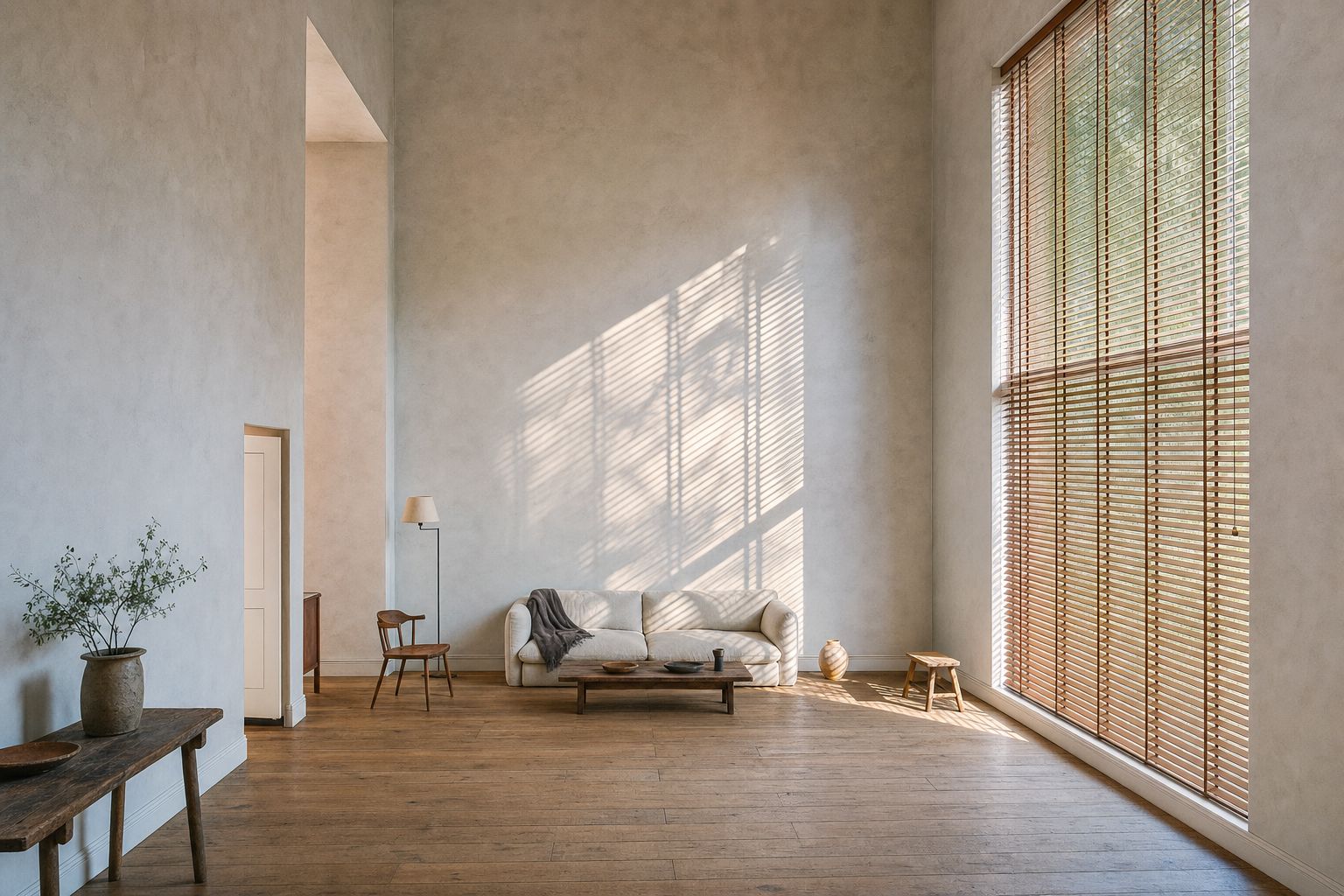
Horizontal slats on a tilting ladder — the one blind with two separate controls, because raising it and angling it are different actions doing different jobs. Raise it and the glass clears; tilt it and the light changes direction without the window giving up its cover.
Blinds Company · Rated 4.8 out of 5 on Google
Free in-home measure · open 8am–9pm, 7 days
- Two controls, not one
- Raise it to uncover the glass; tilt it to change the angle the daylight enters at. They are different actions doing different jobs.
- Timber, composite or aluminum
- Three slat materials on the same mechanism, chosen mostly by how damp the room gets.
- Daylight and privacy at once
- Slats angled upward are opaque to anyone looking in from below while the room stays lit.
- Dust is the honest cost
- More surfaces than anything else we fit — a few minutes per blind, a few times a year, and we say so before you order.
In short
A venetian blind is a stack of horizontal slats that raise to clear the window and tilt to redirect the light coming through it. The tilt is the point: turned upward, slats bounce low sun onto the ceiling and the room stays bright without glare — a kind of control no fabric blind possesses, and the reason the design has outlived every trend that was supposed to replace it.
Inside this pageJump to one of 6 topics
One blind, two different verbs
Every blind on this site except this one answers a single question: how much of the window should be covered right now. Roller, zebra, roman, cellular — different fabrics, one axis. A venetian has two. Raise it and the slats gather at the top of the glass, out of the way. Tilt it and every slat rotates in place, together, changing the angle the daylight enters at while the window stays covered.
That second verb is the entire case for the product. Tilting does not reduce the light so much as redirect it: turned upward, the slats send the incoming beam onto the ceiling, where it spreads back down as soft, even brightness. The room is lit and nobody is squinting. Turned downward, the slats drop the light to the floor, which is what you want when the glare is bouncing up off snow or a pale driveway. No fabric blind of any kind can do either of these things — a fabric can only be more or less in the way.
The seven o’clock problem
There is one hour this mechanism might as well have been designed for. Late on a summer evening the sun sits low in the west and comes in almost level — under a raised roller entirely, and past a half-lowered one straight into eyes and screens. Catching a horizontal beam with a top-down blind means bringing it nearly to the sill, and the room goes dim at exactly the hour it wanted to be golden.
Slats meet that beam at its own angle. Tilted a little past level, they intercept the low sun and pass its light on upward, and the room keeps its evening without wincing through it. The morning version of the same trick is privacy: slats angled up are opaque to anyone looking in from below, so a ground-floor room can be daylit and unwatched at once — no curtain-twitching required.
Three materials, three temperaments
The mechanism is common to every venetian; the slat is where the choices live, and the two big ones behave differently enough to have their own pages.
Real timber is the warm one — grain that repeats nowhere, and lighter than it looks, which matters more on wide windows than anyone expects. It is also the material with a genuine enemy in humidity, which is why it gets its own honest reckoning on the wood blinds page.
Composite looks toward timber and behaves like plastic, in the best sense: steam, splash and damp leave it unmoved, and it wipes clean. The full case, including where it falls short of the real thing, is on the faux wood blinds page.
Aluminum is the thin, crisp one — slats that all but vanish when open, indifferent to a wet sill, and in a dark finish far more deliberate-looking than its reputation suggests. On a small window in a modern condo it is frequently the right call, and it is never the wrong one in a damp room.
How you drive one
The daily control on a venetian is the tilt, not the lift — most households set the height once a season and change the angle several times a day, which is worth knowing before choosing the hardware. A rigid wand twists between two fingers, cannot form a loop, and is the build we default to in any room a child uses, along with a cordless lift, at no extra charge. A motor is more useful here than on most products for precisely the same reason: an adjustment made several times a day is the adjustment worth handing to a remote or a schedule, and slats that turn themselves as the sun drops are a small daily pleasure people stop noticing and would riot without.
Where a venetian is the wrong answer
A bedroom that has to be dark. Covered above, and worth its own line: the light-leak is the geometry, not the build quality, and no slat material fixes it.
A short window. A raised venetian does not vanish; the slats park in a band across the top of the glass. On a tall window the band is nothing. On a squat basement or bathroom window it can claim a real slice of an opening that had little to spare, and a roller keeps more of the view.
A house where nobody will dust. More surfaces than anything else we fit, and gravity finds all of them. If the cleaning ritual is not going to happen, we would rather steer you toward a product you will still like in a year.
What it will not do
It will not black out, ever. It will not span a patio door and then get out of the way of it — a covering that must clear a doorway wants to travel sideways, and that job belongs to the vertical blind. And it will not choose its own slat: the material decision is a real one, it changes what the blind weighs, survives and costs, and it is far easier made holding samples at your own window than squinting at a screen. The measure is free, we bring all three, and the tilt makes its own argument in about ten seconds of low sun.
The mechanism
Venetian blinds, part by part
Two controls: raise to uncover, tilt to redirect
Timber, composite or aluminum slats on one mechanism
Daylight and privacy at the same time, from angled slats
Cordless lift and wand tilt standard where children sleep
Hour by hour
The same window, four times over
7am
Early sun on a ground-floor window is two problems arriving together: the beam itself, and the fact that anyone on the sidewalk can see straight in while you deal with it. Slats angled upward answer both in one action — opaque to a view from below, and the light that does get through is thrown at the ceiling instead of at eye level.
Noon
Overhead sun is the easy hour, and the one where the tilt is doing the least work. Set level, the slats let the room simply have its daylight; turned a little downward they drop the light to the floor, which is the setting for glare bouncing up off snow or a pale driveway rather than falling from the sky.
6pm
The hour the mechanism might as well have been designed for. Low western sun comes in almost level — under a raised blind entirely, and past a half-lowered one into eyes and screens. A top-down product has to reach nearly the sill to catch it, going dim exactly when the room was at its best. Slats meet the beam at its own angle and pass it upward.
After dark
The honest limit. Closed slats overlap, they do not seal, so fine lines of light cross at every overlap and down both sides — geometry rather than build quality, and no slat material fixes it. A venetian holds a room's privacy after dark perfectly well and will never make it dark, which is why a bedroom that must be dark gets a second product.
Where it belongs
Rooms venetian blinds answer well
West-facing rooms, where the evening sun arrives too low for any top-down blind to catch gracefully
Ground-floor windows that want the street kept out and the daylight kept in
Anyone who wants to steer the light through the day rather than switch it
In the room
How the choice changes the room
The rest of the range
Everything else, by how it moves
Winds onto a tube
Tilts to aim the light
Folds up out of the way
Slides across the opening
And the fitting itself
Our commitment
We measure it. If it does not fit, we remake it.
The visit is free. See the samples at your own window, get the quote, then decide.
Before you call
Questions worth answering before you book.
What does tilting give me that raising the blind does not?
Raising is a trade: the covered part of the window gives you neither light nor view, and the uncovered part gives you both, glare included. Tilting steps outside that trade. The slats stay across the glass but change their angle, so the light that enters is bent upward onto the ceiling or down toward the floor instead of arriving straight at eye level. The window stays private, the room stays bright, and the beam that was on your screen is somewhere harmless. It is a genuinely different control, not a finer version of the same one.
Which slat material should I choose?
By room, mostly. Real timber is the warmest to look at and the lightest to lift, and it belongs in dry rooms — its full case is on the wood blinds page. Composite does not care about steam and wipes clean, which makes it the kitchen, bathroom and basement answer. Aluminum is the thinnest slat, unbothered by a damp sill, and reads crisp rather than cold in the right room. The measure exists partly so all three can be held against your own window before anything is ordered.
Can a venetian make a room properly dark?
No, and it is better to hear it here than discover it in August at six in the morning. Closed slats overlap; they do not seal. Thin lines of light pass at every overlap and along the sides, and that is a property of the geometry rather than a defect in any particular blind. A bedroom that needs real darkness needs a blackout roller or cellular shade, possibly alongside a venetian if you want its daytime talents too — two products, each doing the job it is built for.
Why do you recommend slats for low evening sun in particular?
Because of the angle. A sun near the horizon sends light in almost level, and a blind that works top-down has to come nearly all the way down to intercept it — at which point the room is dim at the exact hour it was at its best. Slats can be set to meet that specific angle while most of the window stays effectively open. West-facing living rooms are where this pays for itself: the one unusable hour of the evening comes back.
Are they a chore to keep clean?
They collect dust on more surfaces than anything else we sell, and pretending otherwise sells a blind somebody ends up resenting. The realistic routine is short: close the slats one way, run a microfibre cloth or a vacuum brush over the face in long passes, close them the other way, repeat. A few minutes per blind, a few times a year. If that is honestly not going to happen in your house, say so at the measure and we will likely point you at a roller instead.
What about safety in a child's room?
Cordless lift and a rigid tilt wand are our standard build in any room a child uses, at no extra charge — the wand cannot form a loop and the lift leaves nothing hanging. The traditional corded version still exists and still suits plenty of rooms, but it is a specification we make deliberately, window by window, rather than a default we leave for you to notice.
The last chapter
We bring the samples to your windows.
We come to you, measure at your own windows, and go through fabrics and fits together. The visit costs nothing.
$99 off when you order three or more blindsApplied to your written quote at the measure.
Rather just talk?(437) 782-5452Answered 8am–9pm, 7 days
Free in-home measure
Weighing slats against a plain fabric for that window?
Answered 8am–9pm, 7 days.
Page last checked 16 August 2026.