Where we work
Blinds in North York
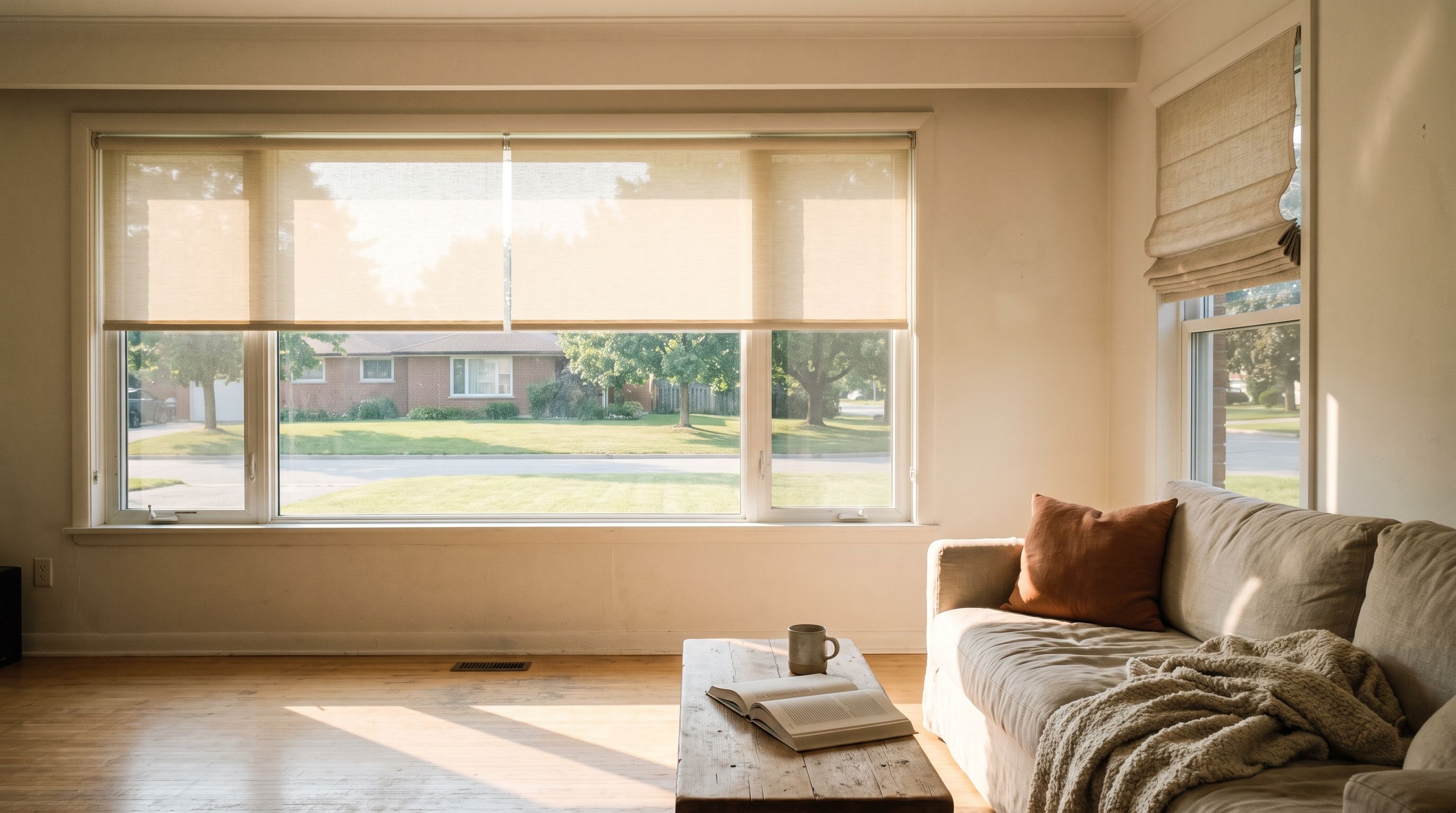
In North York the same afternoon does two different things. It slides politely past a bungalow window tucked under a deep eave in Bathurst Manor, and it fills a Willowdale condo from the floor to the ceiling with nothing to slow it down. We make blinds for both days, measured at your own glass.
Blinds Company · Rated 4.8 out of 5 on Google
Free in-home measure · open 8am–9pm, 7 days
- The eave is half the answer
- A postwar roofline shades its own glass through high summer, which is why these rooms trouble people at dawn, at dusk and in February.
- February beats July here
- Low winter sun slips under the eave that defended the room all summer and lays a glare across the floor that July never managed.
- Small windows pay rent
- Every centimetre of a bungalow pane is working, so the blinds that earn their place are the ones that give the light back when they are open.
- Towers have no depth
- The blind lives in a shallow slot or on the ceiling, and that slot gets measured to the millimetre rather than taken from the floor plan.
In short
North York splits into two kinds of building keeping two kinds of day. The postwar bungalows and sidesplits have small, sheltered openings where trouble arrives at the edges of the day — dawn in an east bedroom, a low February sun reaching under the eave. The towers along Yonge live behind unbroken glass, where the light is not an hour but the entire day. The right blind is a different object in each, and the free visit is how we find out which one you need.
Inside this pageJump to one of 8 topics
Two buildings, two days
Stand at Yonge and Sheppard and look in any direction: glass towers over the avenue, and behind them, streets of one-and-a-half-storey houses from the 1950s. North York holds more of both than anywhere else we work, often on the same block.
The pair make an odd couple at the window. The bungalow was built stingy with glass — heating bills said so — and what glass it has sits shaded under a generous roofline. The tower was built extravagant with it, an entire wall per room, with no eave, no porch and no neighbouring tree between the glass and the sky. One building meters its daylight; the other has no way to refuse any of it.
So the first question we ask in North York is not which product. It is which of these two days you are living in.
The bungalow’s day
A sidesplit in Lawrence Manor or a bungalow in Newtonbrook has a day with quiet middles and loud edges.
Through the core of a summer day the house looks after itself. The sun stands high, the eave casts its shadow down over the glass, and the small rooms stay dim and cool the way they were drawn to. The trouble comes when the sun is low — which is to say at dawn, at dusk, and for most of the winter.
An east bedroom takes the first of it. Sunrise arrives under the eave at a flat angle the roof cannot intercept, and a small window turns out to be perfectly capable of lighting a small room by half past five. The answer is a blackout that actually seals — on openings this size, taking the fit seriously matters more than the fabric label, because the gap beside a loose blind is proportionally huge on a narrow pane.
February is the other loud hour. The winter sun runs low all day, slips beneath the eave that defended the room all summer, and lays a glare across floors and screens that July never managed. A bungalow blind earns its keep in the cold months, which surprises people who shopped for it in August.
The tower’s day
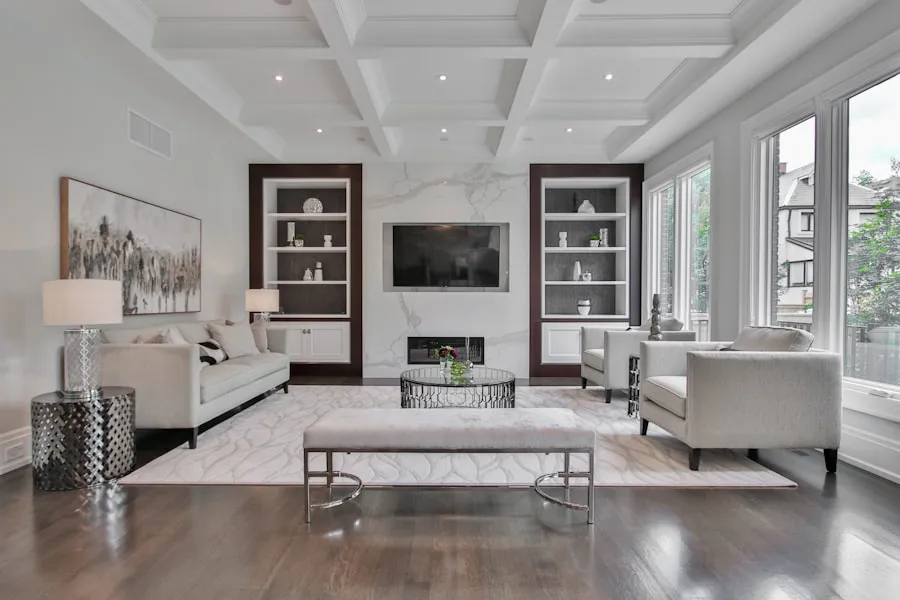
Up in the Willowdale towers the day has no edges to hide in. Floor-to-ceiling glass facing one direction takes its entire allotment of sun in one continuous pour — east units are lit from the first minute of the morning, west units cook from lunch until sunset, and the light lands on every surface in the room at once because there is no wall under the window for it to miss.
What that room needs is not darkness but a volume control. Screen fabric trades a little of the view’s sparkle for most of the glare and a good share of the heat, and the skyline stays. At the sleeping end of the same glass the job reverses: after dark an uncovered unit is lit for every balcony opposite, and the bedroom wants something genuinely opaque to pull across the night.
The one thing a tower never gives you is depth. The blind lives in a shallow slot or on the ceiling, which is why the short list here is short — and why we measure that slot to the millimetre rather than assuming it matches the floor plan.
Don Mills asked for its glass on purpose
Don Mills is its own case, and worth naming. It was laid out in the postwar years as a deliberately modern district, and the houses carry more and larger glass than the bungalows going up elsewhere at the same time — picture windows, low horizontals, rooms arranged to face their gardens.
Those windows were an argument about light, and the blind should not win the argument. Clean single planes of fabric — a roller, a flat honeycomb — keep the geometry the house was drawn with, and a screen weave keeps the garden in view while it takes the shine off the afternoon. What we rarely suggest there is anything fussy: a modernist window in a frilly dress helps nobody.
York Mills, Bayview Village, and light that comes through leaves
The streets around York Mills and Bayview Village grew their canopy decades ago, and a mature tree is a seasonal instrument. From May to October it does a blind’s whole job on the rooms behind it; in November it resigns without notice, and the low winter sun walks straight through the bare branches into rooms that spent all summer needing nothing.
The honest specification for those rooms is chosen against the bare-branch months, not the leafy ones — something adjustable enough to disappear in July and work hard in January. It is the opposite of how most people shop, which is precisely why we bring it up at the visit.
How the visit runs here
We come to you, any day of the week, phones open 8am–9pm. Every opening gets its own measurements, the fabrics get held up in the actual room at something like the hour it misbehaves, and you keep a written quote — itemised window by window, installation date committed on paper, nothing owed and no card taken.
If half your street is bungalows and the other half is a tower podium, we have almost certainly measured both this month. Different buildings, same tape.
A Don Mills room, within the North York conversation
Don Mills is covered as a neighbourhood of North York. Naming it in an enquiry helps describe the destination; it does not turn the room into a standard brief. Start with the moment you want to improve, such as working beside bright glass or closing the room visually once indoor lights are on.
Record the useful view too. If you enjoy part of the outlook, explain which section should stay available when another part needs shading. The frame divisions and fitting space can then be discussed alongside the material. A roller, a fabric fold and a slatted surface provide different movements, and each needs a practical place when open.
The measure takes those questions to your actual windows. Describe the surfaces that will stay, the handles you use and the setting that currently feels awkward. Those details connect a Don Mills enquiry with a practical conversation in your own room.
Show the change you make most often
If you move the covering several times during a normal day, explain the sequence. You might first open it for the outlook, lower it beside a working screen and later close the room visually with the lamps on. Note whether the entire opening needs to change together. One pane can have a different job from the next even when their materials should look related.
Bring that sequence to the window during the home visit. Demonstrate the point where a handle, a nearby chair or the edge of a door changes the available space. A practical setting should be reachable when the room is furnished. By describing movement along with light, you give the fitting discussion more useful detail than a product photograph can provide.
Willowdale: write the room’s useful positions
Willowdale is part of our North York home-measuring service. When asking for a visit, describe the window and the positions you expect to use. Fully open for the view, partly covered while reading and closed for privacy are three different experiences worth considering together.
If the room changes jobs during the day, give those jobs separate names. A screen reflection can involve one pane while a lamp-lit privacy concern involves another. Related materials can connect their appearance without requiring the same opacity. Compare real samples against the finishes you plan to keep, including their behaviour with daylight behind them.
Access and property requirements remain specific to your opening. Mention nearby furniture, moving handles or written building rules that apply to your home. The free home visit covers the measuring and fitting conversation in the room itself. Keep those requirements beside the materials you are considering so appearance and practical use can be discussed together.
Retain a useful view of the sample
Look at fabric with the window’s light behind it and against the surrounding finishes. Then return to the seat where you usually notice that wall. The larger relationship can differ from the close view of texture. Explain which colours you plan to retain and which parts of the room are changing; the selected covering will be seen beside those surfaces every day.
Consider where the material will rest when open. A raised fold, a stack of slats and a curtain gathered at one side give the opening different outlines. Compare that position with the frame or view you want to preserve. This is a small visual check with a practical purpose: it keeps the discussion connected to both the lowered covering and the room you see when the glass is available.
Hour by hour
The same window, four times over
7am
Dawn is the bungalow's loud edge. The summer sun comes up flat enough to pass beneath a roofline built to stop it, and a modest east window will light a modest room by half past five. On a narrow pane the gap beside a loose blind is proportionally huge, so the fit carries more of the job than the fabric label does.
Noon
Through the middle of a summer day a postwar bungalow needs almost nothing. The sun is high, the roofline holds its own shadow across the glass, and the rooms behind stay cool by design. A Willowdale tower gets no such help — no eave, no porch, and glass that starts at the floor.
6pm
A west unit on Yonge takes its whole allotment in one continuous pour from midday onward, and with no wall beneath the glass it lands on every surface at once. Screen fabric trades a little brilliance for most of the glare and a real share of the heat, and the skyline survives the trade.
After dark
Height reverses the deal. An uncovered unit is lit for every balcony opposite, so the sleeping end of a glass wall wants something genuinely opaque to pull across the night — fitted into a shallow slot or off the ceiling, because a tower never gives a blind any depth to hide in.
Room studies
Three ways to answer the light
Editorial room studies illustrating the brief — not photographs of client installations.
Inside the city
We measure across North York, not from a showroom in it.
- Willowdale
- Bayview Village
- Don Mills
- York Mills
- Lawrence Manor
- Newtonbrook
- Bathurst Manor
- Downsview
Those are the parts of North York we are asked for most often — not the edge of where we go. If your street is not on the list, it is still on the route.
The rest of the range
Everything else we fit in North York
Winds onto a tube
Tilts to aim the light
Folds up out of the way
Slides across the opening
And the fitting itself
Our commitment
We measure it. If it does not fit, we remake it.
The visit is free. See the samples at your own window, get the quote, then decide.
Before you call
Questions worth answering before you book.
What suits the postwar bungalows around Bathurst Manor and Lawrence Manor?
Something that respects how little glass there is. A bungalow window is modest, and every centimetre of it is paying rent — so the products that earn their place are the ones that give light back when they are open. A venetian tilts to let the sky in while cutting the beam; a roman stacks high and clears the pane almost completely. What we talk you out of is anything bulky on a small opening, because a small window wearing a heavy blind reads even smaller.
What actually works in the towers along Yonge?
Rollers and honeycombs do most of the work, partly because tower windows leave little room for anything deeper, and mostly because the day there needs managing rather than blocking. A solar screen keeps the skyline and loses the glare; a blackout layer behind it turns the sleeping end of a glass wall into an actual bedroom. Many buildings ask for proof of insurance before trades come up, and some care what colour faces the street — both are routine, and we sort them out while the quote is being written.
Our bedroom is bright before five in June. Can that genuinely be fixed?
Yes, and the fabric is the easy half. Blackout cloth stops light dead, but dawn is patient — it finds the slot along each side of the blind and draws two bright lines on the wall. Fixing that is a fitting exercise: a blind sized tight to the opening, side channels where the room needs true darkness, or an outside mount that overlaps the frame generously. This is exactly the problem the [blackout blinds](/blackout-blinds/) page walks through in detail.
We rent. Can anything go up without drilling into the frames?
It can. No-drill blinds brace inside the opening or clamp to the frame, hold firm, and come down at the end of a tenancy without leaving a mark for the landlord to price. They carry most of the same fabrics as the drilled kind, so choosing to protect a deposit does not mean living behind a worse blind.
Is a child's room treated differently?
As the default, yes. Any room a child sleeps or plays in gets a cordless mechanism at no extra charge — nothing dangling, nothing to loop. It is not an upgrade we offer; it is the version we fit unless there is a reason not to.
Do you cover the whole of North York, and does the visit cost anything?
All of it — Willowdale to Downsview, York Mills to Newtonbrook — and the visit costs nothing anywhere. You get the measure, the fabrics tried in your own light, and a written quote with your installation date committed on it. No deposit, and no obligation to go past the quote.
The last chapter
We bring the samples to your windows.
We come to you, measure at your own windows, and go through fabrics and fits together. The visit costs nothing.
$99 off when you order three or more blindsApplied to your written quote at the measure.
Rather just talk?(437) 782-5452Answered 8am–9pm, 7 days
Free in-home measure
A bungalow hour and a tower hour are easier shown than described. Call and tell us when the light stops behaving.
Answered 8am–9pm, 7 days.
Page last checked 1 October 2026.