Where we work
Blinds in Woodbridge
Woodbridge blinds and shades considered from the evening inward. Plan the view from a sofa, the light beside a dining table and the openings you want to adjust together. Compare the choices at a free home measure.
Blinds Company · Rated 4.8 out of 5 on Google
Free in-home measure · open 8am–9pm, 7 days
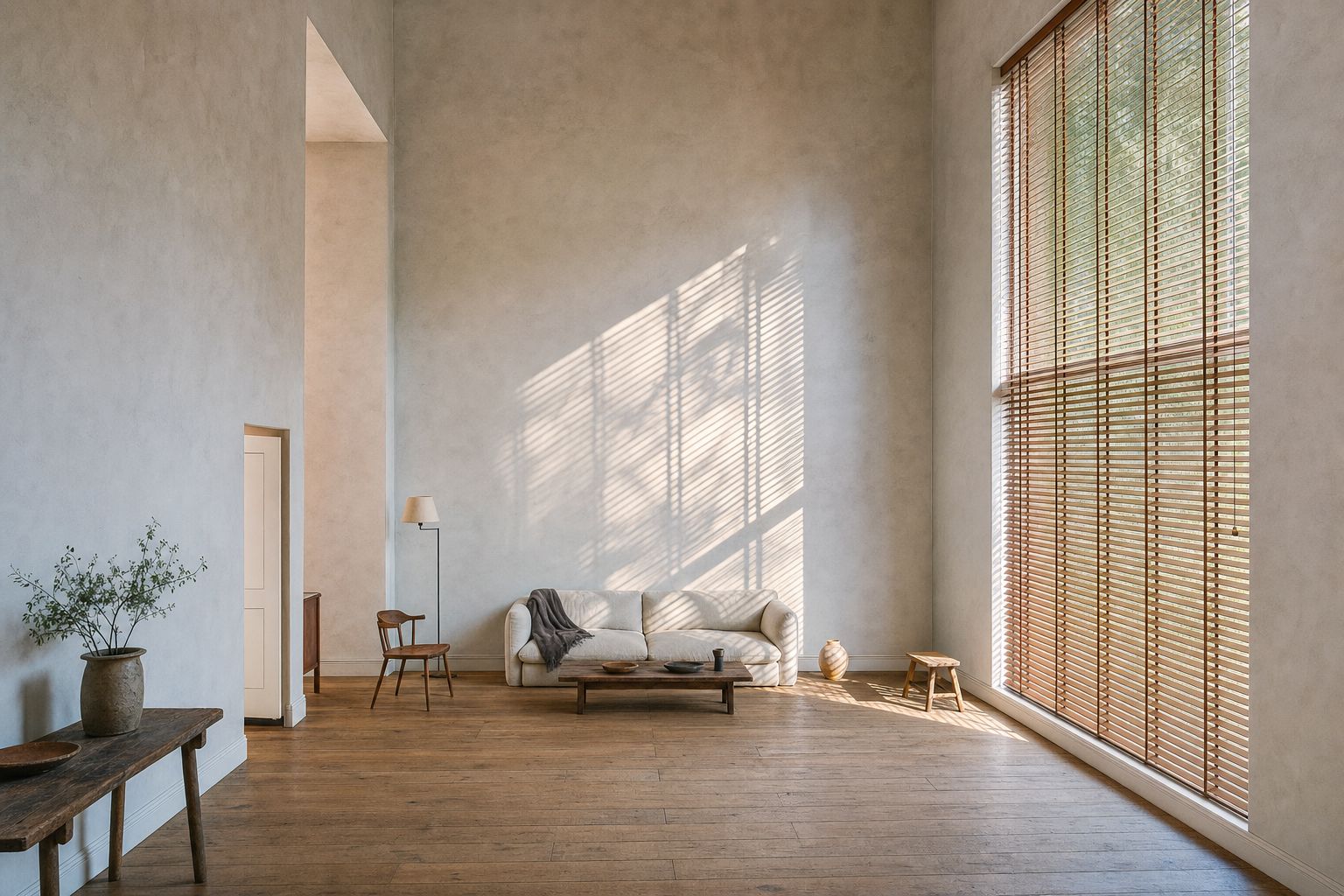
Room illustration, not a photograph of work in this city.
- Last light
- A low bright patch can matter more than the day's average light.
- Seated view
- Judge the glazing from the sofa and dining chair you use.
- Shared room
- Separate panes can support different activities at once.
- Measured here
- Compare the fit against the room's actual openings.
In short
Our home-measuring service is available in Woodbridge. Blinds Company offers a free visit to measure and discuss materials at home. Tell us how the room is used when the sun is low and the lights come on; that gives the covering a clear practical job.
Inside this pageJump to one of 8 topics
Begin with the last hour you spend in the room
For a Woodbridge living or dining room, the evening can reveal the most useful covering brief. The workday is finished, several people may share the space and the lighting begins to change. Instead of describing the window in isolation, describe the room during that last hour. Where are people sitting, what are they looking at and which part of the glass becomes distracting or exposed?
This approach can uncover several needs that are easy to combine too quickly. One person may want to keep the view, another may want a television reflection reduced, and the dining area may need a more private setting once its light is on. A single whole-window decision can conceal those differences. Start by naming them so the product conversation has a practical direction.
Our home-measuring service reaches Woodbridge. We offer a free visit to measure and talk about fabrics and fitting in your home. Point out where you sit and which part of the opening changes the light around that seat. The photograph is an illustration showing slatted light control, not a local portfolio claim. Your seating, glazing and evening routine provide the specific information that a room study cannot.
Watch where the low brightness lands
If the late-day light bothers you, notice where the bright patch travels. It may cross a dining chair, a television or the wall beside a reading place. The window does not need to feel harsh everywhere for that patch to matter. Recording the affected position is more useful than saying the entire room is too sunny. It lets you discuss the particular adjustment that would improve the activity.
Slatted blinds can redirect incoming light by changing their angle. Rollers alter the covered height, while roman shades bring another form of raised fabric. Those differences give you several ways to think about a brief. Do you want to moderate the whole opening, shade its upper area or make a quick adjustment for a short period? The answer should come from the room’s use rather than from a style category.
Consider what daylight remains valuable after the problem is solved. Closing an opaque surface may remove glare and also remove a view you enjoy. A different material or separate section may deserve comparison. The venetian-blinds page explains slat movement, and roller blinds provide another approach. These are introductions to the choices, not promises that one of them suits every Woodbridge opening.
Sit at the table before deciding the sightline
A dining window is experienced for a long time from a seated position. Look at the glass from the chairs you actually use. A rail or fabric stack that appears discreet from the doorway can sit directly in the view from the table. The lower edge of a partly closed blind can also become a prominent horizontal line. Those are reasons to compare the useful positions rather than only the fully closed appearance.
After dark, consider the light over the table. A bright interior next to dark outside space changes how an open weave feels. The material may have been comfortable during the day without providing the visual closure you want over a meal. Describe whether you need a filtered connection to outside or a stronger privacy barrier. The distinction matters more than the colour name on the sample.
If curtains are part of the idea, see where the open fabric would gather from the dining seats. It may overlap another feature or occupy a wall you would prefer to keep clear. Curtains and drapery are confirmed services, and they can be considered alongside blinds. Give each layer a reason to exist and enough space to work, instead of adding a layer purely to reproduce a photographed room.
Allow the shared room to have several settings
When one room supports conversation, reading and television, a single fixed setting is rarely the whole story. Think about whether separate panes could be adjusted independently. A blind near the screen might be lowered while another remains open beside the sofa. The divisions in the actual frame and the available fixing positions influence whether that arrangement is practical and how its gaps will appear.
The visual goal should be stated clearly. You might want aligned rails, related textures or matching lower edges when the coverings are resting together. Those are not the same as insisting they must always move simultaneously. A room can look consistent while allowing useful independence. Discuss which form of consistency you value, then compare it with the room’s competing activities.
For a broad opening, the raised position deserves another look. Different mechanisms gather differently, and a stack at the top may occupy glass you wanted to keep visible. If a door shares the arrangement, its movement may need a separate treatment. Let the fit follow those differences rather than using matching appearance as a reason to ignore them. Coherence is useful only if the room still works comfortably.
Make the evening adjustment easy to reach
A covering you change each evening should be easy to operate from your normal route through the room. If the control is behind a sofa or beyond a deep table, a simple daily action can become a repeated inconvenience. Show the furniture that will remain and the side from which you approach the glass. This is fitting information, not a decorative detail to settle after the material.
For an upper or difficult opening, motorized options may be worth discussing. Their purpose can be everyday access, independent movement or coordinated adjustment. Confirm the actual system’s features, power arrangement and servicing access before interpreting the word motorized as a guarantee of all three. A motor helps with operation; it does not remove the need to understand the opening and its hardware.
Also consider what happens when a pane opens. A handle can occupy space in front of the glass, and an opening section can travel through the area a lowered blind uses. Demonstrate those movements during the measure. A covering should let the window keep its ordinary functions without requiring a workaround every evening. The useful comparison is the complete arrangement in motion, rather than just the material held flat.
Give each privacy requirement its own words
Different people mean different things by privacy. You may want faces obscured, a complete visual barrier or simply relief from the feeling of open dark glass. Say which matters. An open-weave daylight fabric and an opaque evening surface serve different purposes. Neither should be described as doing the other’s job without considering the light on both sides of the window.
For a bedroom connected to the same visual scheme, light around the covering can be another concern. An opaque fabric does not by itself close every perimeter gap. If an edge line wakes you or interrupts sleep, explain where it appears. Fit, overlap and available mounting space should then be part of the discussion, rather than assuming that matching the living-room material answers the bedroom requirement.
It can be helpful to separate the home into a shared palette and individual levels of closure. That permits a room used in the evening to have a different opacity from a bright daytime workspace while the surfaces still feel related. Compare materials together under the room’s light. The blackout-blinds explanation introduces the fabric question, but the opening sets the fit.
Compare the room after the main lights are switched off
Use the lighting you keep on
A room may have bright ceiling lighting during dinner and a single lamp later. Those are different privacy situations. View the sample in the setting you actually use when sitting down to relax. Tell us if a lamp remains close to the glass or if another part of the room stays brightly lit. A photograph of a dark room does not answer how the same material behaves with your lights behind it.
Look from the neighbouring seat
Ask another person to try the place where they normally sit. The angle of a slatted covering can suit one viewpoint while changing the view from the other. Compare the tilt you would use during the evening and the raised position you want during the day. Both experiences belong in the brief, even if the chairs are only a short distance apart.
You can keep this comparison small: one opening, two lighting settings and the seats that matter. Write down the position that feels useful in each setting. The measure can then discuss material, movement and fit around an ordinary evening in your home. That is more informative than choosing solely from the shape of a light stripe in an illustrative room.
Bring the evening brief to the measure
You do not need to draw a finished design. A description of the last hour in the room is enough: the television seat catches light, the table needs more closure or the high pane is difficult to adjust. Add any furniture changes, door movement or access constraint. We can then measure at the windows and discuss the materials against that practical brief during the free visit.
Blinds Company is licensed and insured and has 5+ years in business. Read the proposed materials and fitting choices together when reviewing the work. The installation date for the agreed work is confirmed in the written quote. An illustration can demonstrate a slatted surface and a pattern of light; it cannot establish the operational terms of your own project.
To request the home measure, name the Woodbridge room and the evening change you would most like to make. A useful covering should accommodate the people sharing the space, the view you want to retain and the closure you want once the lamps are on. Begin there, and let the fabric and mechanism follow the room’s actual life.
The rest of the range
Everything else we fit in Woodbridge
Winds onto a tube
Tilts to aim the light
Folds up out of the way
Slides across the opening
And the fitting itself
Before you call
Questions worth answering before you book.
What if one person wants a view and another wants less glare?
Describe the two activities and where they happen. Independently adjustable sections or different useful positions may allow a better compromise than closing the whole wall. The frame divisions and mounting space will influence the options. The aim is to understand the conflict before choosing a material, rather than expecting one fully closed position to suit everybody in the room.
Should a dining window be judged from the doorway?
Sit at the table as well. Glare, privacy and the visible top edge can change at seated height. Notice whether a pendant light makes the room brighter beside the glass after dark, and whether an open covering sits in a place you will see throughout a meal. A doorway view helps with the overall composition but does not describe every everyday experience.
Does motorization guarantee matching heights across a wall?
Coordinated control is a feature to confirm for the proposed system, not a promise made by the presence of a motor. The openings, mounting positions and chosen mechanisms also influence how a row looks. Explain whether your priority is shared operation, aligned lower edges or easy access to each blind. Those goals can require different discussions.
Can a filtered view be treated as full privacy?
No. Seeing through a material and screening a lit interior are separate questions. A material useful while outside is bright can behave differently in the evening. If full visual closure matters, say so and compare an appropriately opaque option or a useful second layer. Judge the requirement under the lights you normally use in the room.
The last chapter
We bring the samples to your windows.
We come to you, measure at your own windows, and go through fabrics and fits together. The visit costs nothing.
$99 off when you order three or more blindsApplied to your written quote at the measure.
Rather just talk?(437) 782-5452Answered 8am–9pm, 7 days
Free in-home measure
How should your Woodbridge room feel at the end of the day?
Answered 8am–9pm, 7 days.
Page last checked 1 October 2026.