Where we work
Blinds in Scarborough
Blinds for Scarborough rooms that change jobs as the day goes on. Begin with breakfast light, screen reflections and the lamps you switch on at night; compare the coverings at home during a free measure.
Blinds Company · Rated 4.8 out of 5 on Google
Free in-home measure · open 8am–9pm, 7 days
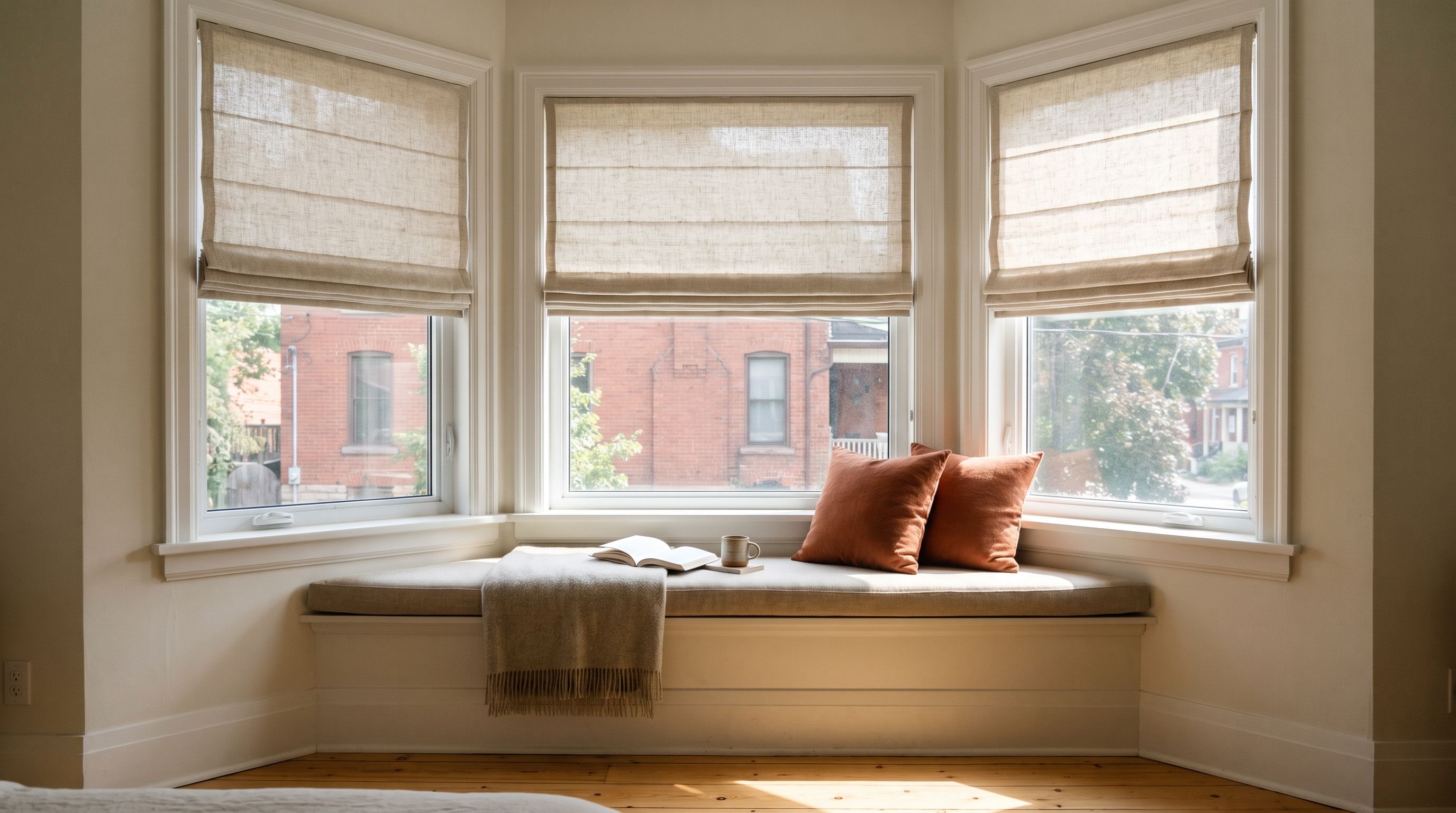
Room illustration, not a photograph of work in this city.
- Morning
- Notice which pane brightens the seat you use first.
- Work hours
- Read the reflection from the chair, not the doorway.
- After dark
- Open weaves need a separate privacy discussion.
- At home
- Measuring and comparing the fit is a free visit.
In short
Scarborough is served as part of Toronto. Our home visit lets you discuss window sizes, material choices and fitting beside the glass. The useful brief is a record of how the room changes, so your daytime view and evening privacy can both be considered.
Inside this pageJump to one of 8 topics
Write the room’s day before choosing its covering
There is a useful exercise for a Scarborough window that seems difficult to get right: write three moments from an ordinary day. What is the room like when you first use it, while you do its main activity and after you turn on the lights? You are not collecting technical data. You are separating several jobs that a single phrase such as “more privacy” can hide.
At breakfast, you may enjoy a clear view and accept bright glass. During work, that same glass might reflect across a laptop. By evening, keeping the outside view could matter less than feeling screened from it. A covering should be considered against those changes rather than judged in one attractive closed position. The diary also helps identify whether one moving surface is enough or two distinct layers would each have a purpose.
Blinds Company provides home measuring in Scarborough, Toronto. A free measure with Blinds Company takes the material and fit conversation into your home. Describe the frames and the change in light that you see across your own day. The illustration at the top is a bay-window room study, not a customer address or a record of local work. Your own windows supply the details that matter.
Breakfast light can be welcome without being uncontrolled
The first bright hour is not always the hour you want to block. If you like daylight at the table, note which part of the room should remain open. You may need relief only where the light crosses a particular seat or catches a glossy surface. Closing every pane can solve the brightness problem while removing the quality you wanted to keep. Partial positions are therefore worth considering before choosing a fabric by opacity alone.
A slatted covering changes how light enters as its angle is adjusted. A roller changes the covered height. A roman shade changes that height while keeping folded fabric above it. These movements have different effects on the view and on the room’s upper edge. Imagine the setting you would use at breakfast, rather than comparing every product fully closed.
Also notice how often you would be willing to adjust the covering. A window you pass naturally may be easy to change several times. One behind a dining bench or a deep table can become awkward. Explain the furniture arrangement during the measure. The way you reach the window can be as important as the weave you choose, especially when the useful setting changes over the course of a normal day.
The work screen gives you a precise place to look
For a home workspace, sit at the desk and identify the bright shape on the screen. It may be a large reflection of the whole opening or a narrow strip at one edge. That observation tells you which part of the glass is causing the problem. A photograph taken from across the room can miss it completely, because glare depends on the relationship between the window, the screen and your eyes.
Consider the rest of the work area too. You may want enough ambient light to read paper comfortably while avoiding a bright background during a video call. Closing an opaque blind can reduce the reflection but change the room more than necessary. A filtering material, a different covered height or an independent section may be worth comparing. No one fabric should be promised as the answer without looking at the actual arrangement.
If the desk is temporary, say which furniture will move before the final choice. A control placed for today’s layout can become inconvenient behind tomorrow’s shelving. The roller-blinds information explains a compact movement, and the commercial-blinds page discusses working spaces. Use those as introductions to the decision, then describe your particular screen and seat during the visit.
The bay can hold more than one daily setting
A bay creates several views at different angles. Even if all its panes look similar, the way each one faces the room and the outside can differ. One side might catch a troublesome reflection while the middle provides the view you want. Treat the covering arrangement as several controls that need to work together physically, rather than automatically treating the bay as one moving object.
The corners deserve a careful look. Fabric folds, brackets and rails have depth, and neighbouring mechanisms need space where the window faces meet. The upper stack must also clear any opening pane. Discuss the raised position because that is the position in which you may enjoy the bay most. A neat closed photograph says little about how much of the upper glass will remain available when the covering is open.
Visual rhythm is another choice. You might value aligned lower edges, matching headrail heights or a related texture across the panes. Those are specific goals that can be discussed without insisting on an identical mechanism everywhere. The bay-window guide provides a closer look at divided openings. Bring a wide view of the bay if you want to explain its shape before an appointment.
Evening changes the direction of the privacy question
Once the lamps are on, the room and the street exchange roles in the light balance. A weave that felt private while the outside was bright may reveal more of a lit interior after dark. Do not decide night-time screening from a daylight sample alone. Say whether you want a soft outline, a visual barrier or a bedroom arrangement where light control is the main concern.
The position of the lamps can matter to how the room feels. A lamp close to glass lights the space immediately behind the covering; a lower light farther into the room produces another effect. Think of the setting you actually use, including any lighting left on while you watch television. Privacy is not merely a property of a colour. Material openness and the lighting on each side contribute to it.
Curtains can be discussed where a separate evening layer would do a useful job. They need somewhere to gather when open and suitable space for their fixing. An extra layer that obstructs a door or crowds a small wall may be an unhelpful compromise. Our service range includes both blinds and drapery, so the visit can compare their roles together rather than assume your first product idea must solve everything.
Keep the opening’s other jobs visible
A window still needs to open, be cleaned and coexist with the furniture around it. Add those ordinary tasks to your daylight diary. If you raise the existing blind to turn a handle, explain that interruption. If reaching it involves climbing around a chair, show the access. These observations keep the fabric conversation grounded in a fitting that will be usable after the photograph-perfect moment has passed.
For a rented home, permission is a separate matter from product suitability. Obtain the owner’s requirements for fixing before relying on a no-drill idea or any other approach. A product intended to reduce drilling still needs a compatible frame and an appropriate installation. We do not state a single policy for Scarborough rentals or buildings; the actual property requirements are the authority for that decision.
A future change also belongs in the brief. Replacement windows, new trim or a changed room layout can affect clearance and dimensions. A discussion can begin while those choices are being made, but the final measurement should relate to the surfaces that will remain. It is better to say which part is unfinished than to carry a convenient old dimension into a new order.
Share a room diary that someone else can follow
Record the position, not only the complaint
A useful note names the seat, the time and the part of the opening involved. “The screen is hard to see” becomes easier to discuss when you can point out which pane is reflected and where you were sitting. Use a quick photograph from that seat if it helps you remember. An image taken from the doorway can show an attractive room while missing the bright patch that actually interrupted your work.
Keep the successful moments too
Write down when the existing arrangement is pleasant. Perhaps you enjoy the view with the covering partly raised, or a particular position leaves enough daylight for reading. Those moments help distinguish what you want to change from what you want to preserve. Replacing a covering need not mean replacing every part of the room’s light routine.
Share the short diary with anyone else who uses the same window. Their working seat or evening habit may add a different requirement. Bring both observations to the measure, even when they seem to pull in opposite directions. A clear account of the room’s useful and troublesome moments gives the fitting discussion more substance than a long list of product names.
A useful visit starts with observations, not a finished order
Bring the three moments you recorded and point to the window involved in each. That gives the free measure a clear focus: useful daylight in the morning, a workable screen position and the privacy you expect with the lamps on. We measure at your openings and talk through materials and fit. You can compare the options without having every product name settled in advance.
Blinds Company has 5+ years in business and is licensed and insured. Review the selected fabrics and the fitting arrangement together with your proposal. The installation date is confirmed in the written quote for the agreed work. An illustrative bay room cannot tell you what those details will be for your own opening.
Use the booking enquiry to name the Scarborough room and the part of its day you want to improve. A short description of the difficulty is more valuable than an assumed specification. Once the window’s jobs are clear, the covering can be chosen for its useful positions, its material behaviour and the space it needs in your home.
The rest of the range
Everything else we fit in Scarborough
Winds onto a tube
Tilts to aim the light
Folds up out of the way
Slides across the opening
And the fitting itself
Before you call
Questions worth answering before you book.
Why record the time when glare appears?
A room can be comfortable for most of the day and difficult for one short period. Knowing when the reflection appears helps you describe whether you want a quick adjustment or sustained filtering. You need not calculate the sun's path. A note about the affected chair, screen and time gives the fabric discussion a practical purpose.
Will a bay need matching movement on every section?
Not necessarily. Think of the bay as several useful views rather than one object that must always close together. One section may be beside a desk, another may provide the view you enjoy. The rails and corners still need assessing as a set. Independent adjustment can be useful only if the mechanisms and their raised positions fit the arrangement.
How should a renter start the discussion?
Ask the property owner about permitted fixing methods before committing to a covering. Share any written requirements, and distinguish a preference for minimal change from permission to attach hardware. No-drill products are in the service range, but a particular frame must suit the selected system. A general product name does not establish either landlord approval or a suitable fit.
Can I ask for help with just one problem window?
You can describe a single opening when requesting the free visit. Explain its role and what bothers you: a lamp-lit room visible from outside, early light beside the bed or glare on a work screen. A clear problem is enough to begin. Do not add measurements or products to the enquiry simply because you feel the entire room must already be planned.
The last chapter
We bring the samples to your windows.
We come to you, measure at your own windows, and go through fabrics and fits together. The visit costs nothing.
$99 off when you order three or more blindsApplied to your written quote at the measure.
Rather just talk?(437) 782-5452Answered 8am–9pm, 7 days
Free in-home measure
What does your Scarborough room need when its lights come on?
Answered 8am–9pm, 7 days.
Page last checked 1 October 2026.