Where we work
Blinds in Richmond Hill
Custom blinds, shades and curtains across Richmond Hill — from the heritage streets around Mill Pond to the newer subdivisions climbing the Oak Ridges Moraine — with the family bedroom taken as seriously as the showpiece foyer.
Blinds Company · Rated 4.8 out of 5 on Google
Free in-home measure · open 8am–9pm, 7 days
- Edges lose bedtime, not fabric
- Blackout stops what it covers, so a close fit inside the opening, or side channels, is what actually darkens a room.
- An arch is usually left alone
- Set high over a foyer it only ever delivers daylight, and we would rather say so than sell a shaped covering nobody needed.
- Reach before fabric
- A two-storey foyer window is a reach question first, and battery motors have made that an ordinary one to answer.
- A century of housing, one town
- Mill Pond's settled openings, Bayview Hill's nineties glazing and Jefferson's builder sizes are three specifications inside the same limits.
In short
We measure, make and install window coverings throughout Richmond Hill and the rest of York Region. The town spans a full century of housing — village core, nineties executive streets, new construction against the moraine — and most briefs here are family briefs: dark bedrooms for early bedtimes, cordless safety by default, and a front elevation that looks composed from the street. The measuring visit is free.
Inside this pageJump to one of 5 topics
A century of town, read street by street
Mill Pond and Crosby hold the old centre — quieter streets around the pond, houses old enough to have character and the settled openings that come with it. The Observatory streets take their name from the David Dunlap Observatory on its hill nearby. Devonsleigh and Bayview Hill carry the eighties and nineties, Bayview Hill especially, with the confident glazing of that decade. Jefferson, Rouge Woods and Oak Ridges are the newer chapters, built up against the wooded rise of the moraine.
That is a full century of window-making inside one town’s limits, and it is why no single product answers Richmond Hill. The house decides. Our job is to read it correctly, which is what the visit is for.
Foyers, arches, and the glass of the nineties
Bayview Hill’s era built for arrival: double-height entries, windows stacked over the front door, an arch crowning the composition. An arch set high over a foyer is doing its only job — light — and usually does it best undressed; the money belongs on the rectangles below, where the sun and the sightlines actually live. Saying so occasionally talks us out of work, and we prefer that to selling a shaped covering for a problem the window does not have.
The tall glass below is a reach question before it is a fabric question. Motorized shades have made it an easy one — a remote, or a schedule, instead of a pole and a prayer — and the same motor quietly solves the stairwell window, the over-the-tub window, and every other pane that was drawn for effect rather than for arms.
The bedroom brief
This is a town of family houses, and one question comes up at nearly every measure: how do you make a child’s room dark at eight on a June evening, when the sky will not cooperate for another hour? Fabric, fitted properly. Blackout stops what it covers, and fitting it close within the opening — or adding side channels where the reveal runs shallow — deals with the edges, which is where bedtime is usually lost.
The same blind earns its keep again at the other end of the day, in June mornings that are bright before six. Cordless is the default wherever a child sleeps, at no extra charge, and a motor on a schedule can end the whole negotiation: the room darkens at bedtime whether or not anyone remembers to walk upstairs.
Up on the moraine
Oak Ridges, Jefferson and Rouge Woods climb ground that does something flat subdivisions cannot: it stacks houses at different heights. Some sit high enough to hold a long western view and the long evening sun that comes with it. Others back onto woods that settle the privacy question for free — a lot like that often needs almost nothing at the rear and wants the street face composed instead, which is a cheaper and better brief than covering everything evenly.
The useful homework before any of it: notice which hour of which room actually annoys you, and tell us that. “The kitchen at five” or “the bedroom at dawn” is worth more to a specification than any amount of measuring you might do yourself — the measuring is our job anyway.
The town that valued darkness
The Observatory neighbourhood is named for the David Dunlap Observatory, whose telescope has kept watch from its hill since the 1930s — an institution built on the idea that darkness, properly protected, lets you see better. We are in a much smaller corner of the same business. A bedroom that goes genuinely dark at will, in a town this bright with growth, is a small nightly luxury that never wears out.
The visit that starts it is free, it takes about an hour, and it commits you to nothing except knowing what your windows actually need.
Hour by hour
The same window, four times over
7am
June is bright here well before six, and the bedroom is the brief that comes up at nearly every measure. Blackout stops what it covers; fitting it close within the opening, or running side channels where the reveal is shallow, deals with the edges — which is where the extra hour of sleep is usually lost.
Noon
Midday is when a Bayview Hill foyer looks best and asks for least. An arch set high over an entry is only ever delivering daylight, and covering it buys no privacy anybody was missing; the tall rectangles below it are where the sun and the sightlines actually live.
6pm
Up on the moraine the ground stacks houses at different heights, and a lot sitting high in Oak Ridges or Jefferson holds a long western view with the long evening sun that comes with it. Backing onto woods settles the privacy question for free, which leaves the street face as the thing to compose.
After dark
The other end of the same bedroom brief. In June the sky will not cooperate for an hour after bedtime, and a motor on a schedule ends the negotiation altogether — the room darkens at the appointed time whether or not anyone remembers to walk upstairs.
Room studies
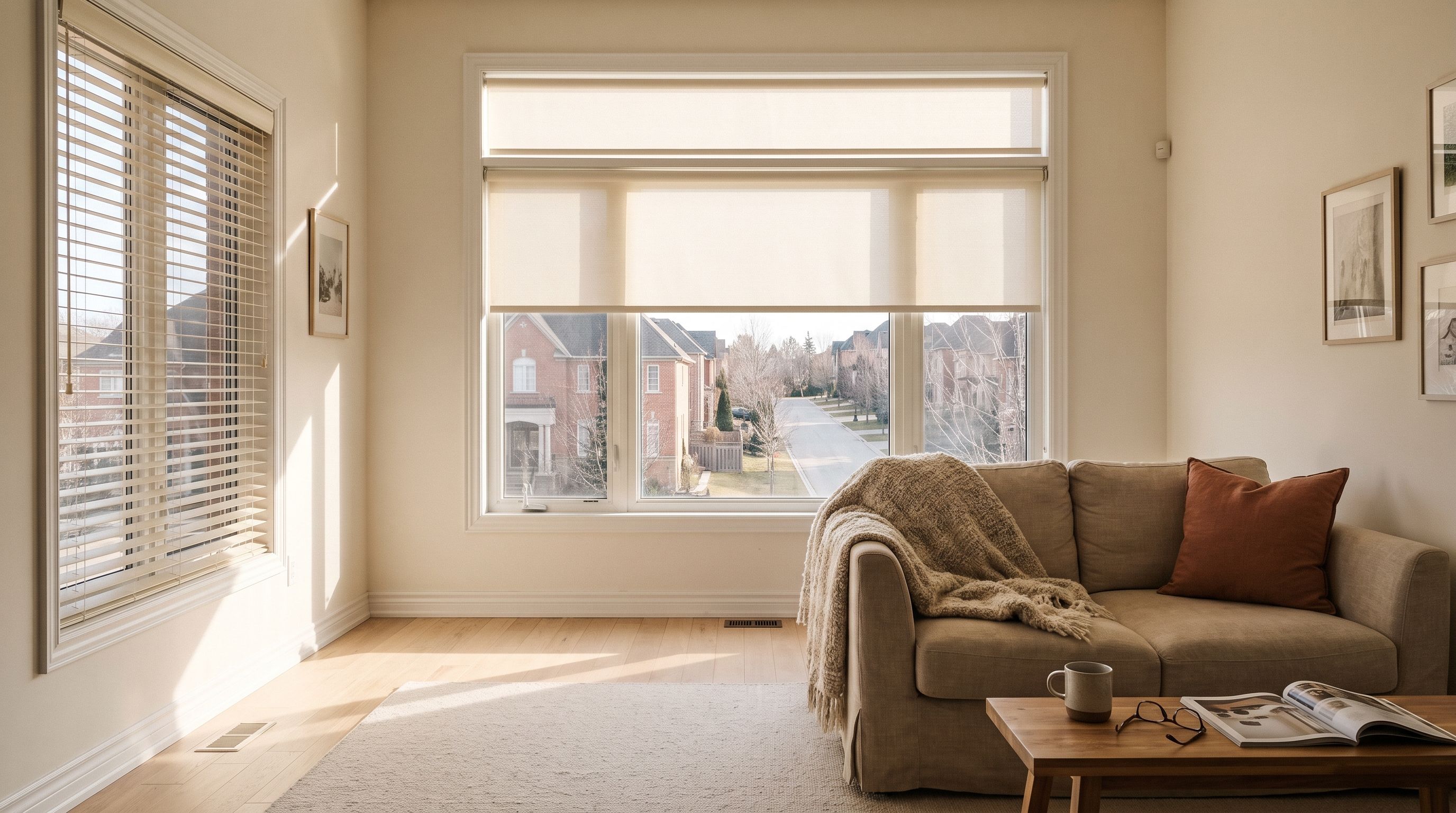
Three ways to answer the light
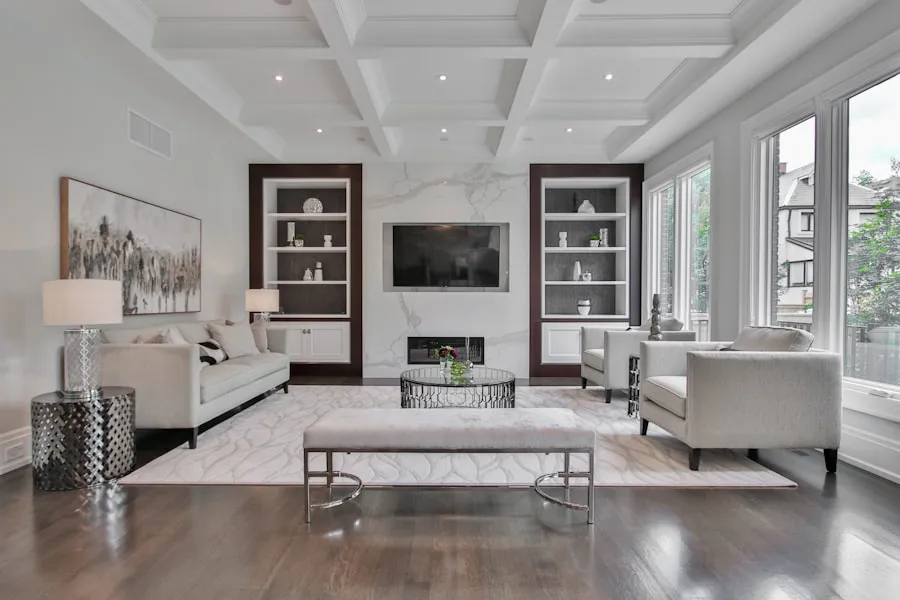
Editorial room studies illustrating the brief — not photographs of client installations.
Inside the city
We measure across Richmond Hill, not from a showroom in it.
- Oak Ridges
- Bayview Hill
- Mill Pond
- Jefferson
- Observatory
- Crosby
- Devonsleigh
- Rouge Woods
Those are the parts of Richmond Hill we are asked for most often — not the edge of where we go. If your street is not on the list, it is still on the route.
The rest of the range
Everything else we fit in Richmond Hill
Winds onto a tube
Tilts to aim the light
Folds up out of the way
Slides across the opening
And the fitting itself
Our commitment
We measure it. If it does not fit, we remake it.
The visit is free. See the samples at your own window, get the quote, then decide.
Before you call
Questions worth answering before you book.
Do you serve all of Richmond Hill?
Yes — Mill Pond and Crosby in the old centre, Bayview Hill, Devonsleigh, the Observatory streets, and the newer ground at Jefferson, Rouge Woods and Oak Ridges. We cover the rest of York Region too, including Vaughan and Markham, so a job split across two houses books as easily as one. Phones are open 8am–9pm, seven days.
What is distinctive about Richmond Hill's windows?
The range packed into one town. Around Mill Pond the openings are old enough to have settled and earned their trim; Bayview Hill brought the grand gestures of the nineties — double-height foyers, arched glass, composed front elevations — while Jefferson and Rouge Woods run to newer builder glazing in consistent sizes. Three eras, three different specifications, one tape measure.
Can you cover an arched or specialty-shaped window?
Yes. Shaped and fixed treatments exist for arches, angles and circles, and where one genuinely earns its trouble — usually by leaking light into a bedroom over the top of an ordinary blind — we specify and fit them. We will also say when the better answer is nothing at all: plenty of arches sit high enough that they only ever deliver daylight, and covering one buys no privacy anyone was missing.
What do you recommend for children's bedrooms?
Blackout, cordless, and fitted deep. In June it is still light at a child's bedtime and bright again long before anyone means to be awake, so the fabric has to do what the sky will not. A blackout roller or cellular shade fitted close within the opening controls the edges, which is where bedtime is usually lost, and cordless operation is our default in any room a child uses, at no extra charge.
Our foyer window is too high to reach. What are the options?
Motorization, mostly, and it has become pleasantly ordinary — battery motors install without an electrician and recharge in place, moving a shade you could otherwise only work from a ladder. The alternative is a fixed treatment chosen never to need adjusting, such as a screen fabric set at one height. Which is right depends on whether that window's light ever actually bothers anyone, a question best answered standing in the foyer rather than in a catalogue.
Do you handle the older houses around Mill Pond differently?
We handle them the way old houses everywhere deserve — measured as they actually are, fixed where the fixings will never show, and with real respect for original woodwork. Openings that have stood for generations are seldom perfectly square any more, which changes how a blind should be cut and mounted. None of it is a problem; all of it is a reason the measurement happens in person.
The last chapter
We bring the samples to your windows.
We come to you, measure at your own windows, and go through fabrics and fits together. The visit costs nothing.
$99 off when you order three or more blindsApplied to your written quote at the measure.
Rather just talk?(437) 782-5452Answered 8am–9pm, 7 days
Free in-home measure
An arch nobody has ever covered properly, or a June bedtime the curtains keep losing to?
Answered 8am–9pm, 7 days.
Page last checked 16 August 2026.