The range
Motorized blinds
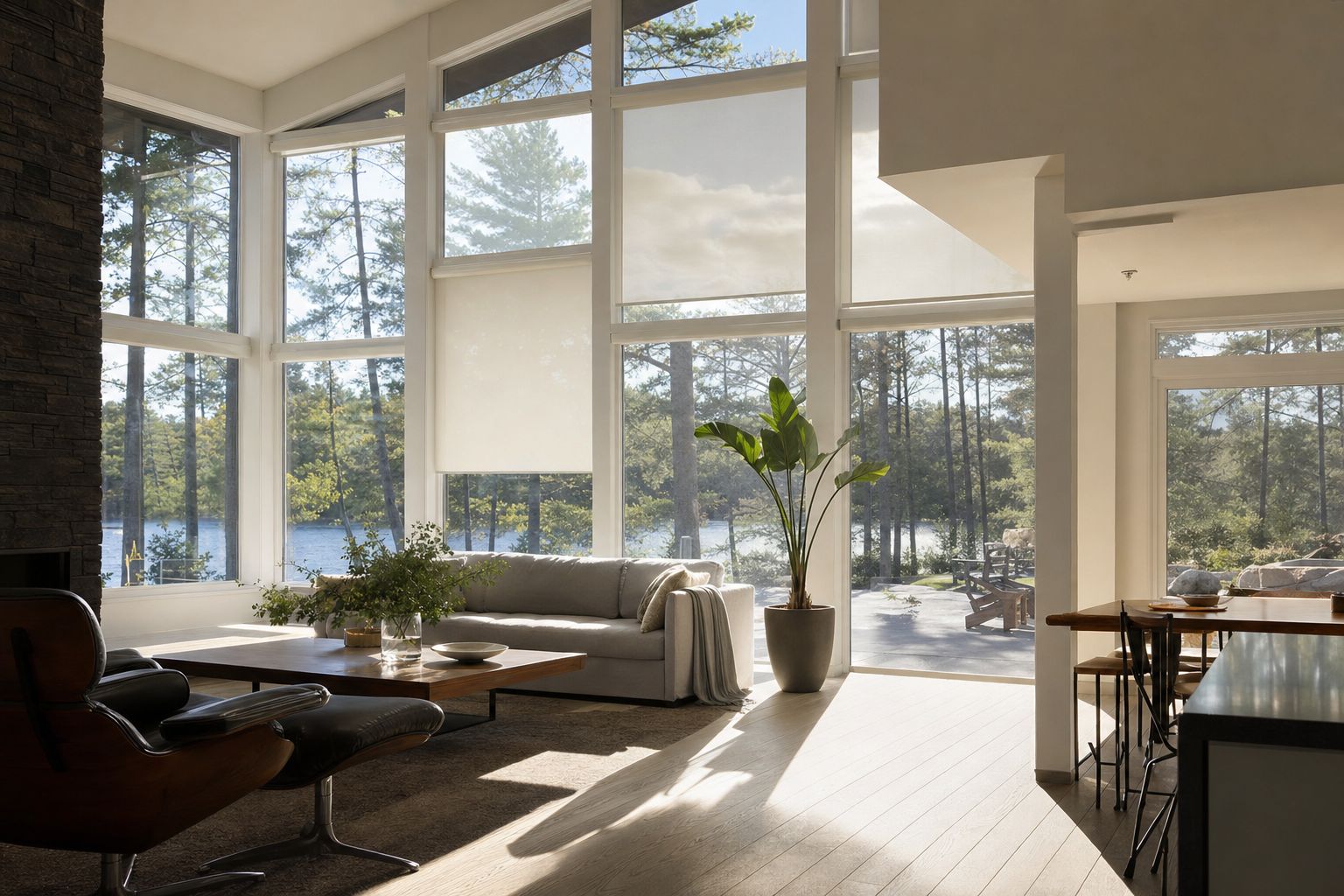
Not a separate product — a decision available on every product we make. The motor goes where the chain or the spring would have gone, the control goes on the wall or in a drawer, and the blind itself — fabric, cassette, fit — is exactly the blind you would have chosen anyway.
Blinds Company · Rated 4.8 out of 5 on Google
Free in-home measure · open 8am–9pm, 7 days
- A layer, not a range
- Any blind we make can be ordered with the motor built in, in the same fabric and the same fit.
- Remote first, app optional
- The remote and wall control talk directly to the motor; a hub adds phone, voice and schedules only if you want them.
- Battery or hardwired
- A rechargeable pack needs no electrician, and wiring is worth it mainly where the wall is already open.
- Tilt, on a slatted blind
- Wood, faux wood and venetian blinds are usually motorized on the tilt rather than on the lift.
In short
Motorizing a blind means building a small motor into its mechanism — the tube of a roller or zebra, the headrail of a shade — and driving it from a remote, a wall control, or optionally a hub that puts it on your phone. Any blind in our range can be ordered this way, and nothing about how it looks changes. Power comes from a rechargeable battery pack that needs no wiring, or from a hardwired supply where one can be planned in early enough.
Inside this pageJump to one of 5 topics
The blind does not change. The reaching does.
Strip the mystery off and the service is small: where a blind would have had a spring or a chain, it has a motor; where your hand would have gone, a button goes instead. Everything a page on this site says about a fabric, a weave or a fit stays true when that blind is motorized, because the cloth and the cassette are untouched — the motor hides inside the mechanism and declares itself only by the quiet few seconds it runs.
That is why we treat motorization as a layer rather than a product line. There is no separate “motorized range” with its own fabrics and its own compromises. You choose the blind the way every other page here asks you to — by the hour of light it has to solve — and then decide whether this particular window earns a motor. A zebra blind that gets nudged four times a day is a strong candidate. A guest-room roller touched twice a year is not, and we will say so.
The hours a motor keeps for you
This site sorts windows by the hour they misbehave, and a motor is the first product on it that can be somewhere you are not.
At six in the morning, a schedule can hold the blackout down past first light and lift it when the day is actually supposed to start — the window stops deciding when you wake. At three in the afternoon, the west-facing wall can close on its own while the house stands empty, taking the harshest stretch of sun off the floors and the furniture with nobody home to think of it. At seven in the evening, a whole wall of glass comes down in one press instead of a walk along the window line. At ten, the house closes from wherever you happen to be standing.
None of that requires an app if you would rather not have one — a wall control by the light switch does the seven o’clock job perfectly well. The schedule is the part that needs a hub, and it is the part that does something no person in the house can: operate a window while everyone is out.
Ordered motorized, or motorized later
Built from the start is the cleaner path. The motor is chosen together with the blind and sized against the finished article — this fabric, this width, this drop — so it never labours, and the whole assembly arrives as one thing with nothing bolted on. If you already suspect a window wants a motor, say it at the measure and the decision costs you one sentence.
Retrofitting an existing blind is real but conditional. Some mechanisms accept a motor willingly; others were never built to take one, and a blind near the end of its life makes a poor foundation for new hardware however willing the mechanism. We would rather look at the actual blind and tell you honestly which side of the line it falls on than sell a retrofit that flatters neither the motor nor the blind. Sometimes the right answer is that the window deserves a new blind that was born motorized — and sometimes the right answer is that your existing one will take the upgrade happily. The measure settles it.
Where the power comes from
Two ways, and the state of your walls mostly decides between them.
A rechargeable battery pack lives with the blind and charges from a cable brought to the window now and then. No electrician, no wiring, no marks on the plaster — which is why it is the default answer in any finished room. The charging is a reminder, not a chore, and it is the whole of the maintenance.
A hardwired supply never needs charging and never announces itself, but it has to be planned while planning is cheap — during a renovation, a new build, or any moment the wall is already open. Retrofitting wiring into a finished room is the one version of this service we talk people out of more often than into: the battery does the same job without the drywall repair.
Apps, voices, and the part that lasts
The connected layer is real and we install it gladly: a hub joins the blinds to your network, and from there a phone can group them, a schedule can run them, and a voice assistant can be told to close the bedroom. Households that use it use it daily.
But it is worth saying which part of the system to trust with your daily habit. The remote and the wall control speak to the motor directly and will keep doing so regardless of what happens to any app, account or platform in the years the blind will hang there. Software is the part of this product that changes fastest; the radio in the wall control is the part that simply keeps working. So we set every motorized blind up to be fully usable without its hub — the connected features are a pleasure on top, never a dependency underneath.
The same logic scales up: a floor of identical windows on one schedule is most of what makes motorization pay in a workplace, which is its own conversation on the commercial blinds page.
The mechanism
Motorized blinds, part by part
Any blind in the range, same fabric and same fit, with the motor built in
Remote or wall control that speaks to the motor directly — no network required
App, voice and schedules available as an optional layer on top
Rechargeable battery packs, or hardwired where the wiring can be planned
Hour by hour
The same window, four times over
7am
The motor runs for a few quiet seconds and stops exactly where it was told — the same height every morning, which a hand never quite repeats. On a bedroom blackout that repeatability is most of the point: the stopping position that works is set once and does not drift down over the week.
Noon
On a slatted blind the motor usually drives the tilt rather than the lift, because the tilt is the adjustment you make several times between morning and evening while the lift is the one you touch twice a year. Motorising the movement you actually use is the difference between a useful window and an expensive one.
6pm
A whole wall of glass comes down in one press instead of a walk along the window line — and each blind still holds its own stopping height inside that group rather than sharing one. On a wall of unequal windows, that distinction is why the room still looks composed once everything is down.
After dark
The control that matters after dark is the one beside the light switch, and it speaks straight to the motor over its own radio: no account, no network, nothing that can be down. We set every motorized blind up to work fully without its hub, because software changes faster than a blind that will hang there for years.
Where it belongs
Rooms motorized blinds answer well
Windows out of reach — stair glass, double-height openings, anything behind a counter or a tub
A wall of blinds that is better moved as one than pulled one at a time
Bedrooms and children's rooms, where the motor also retires the cord
In the room
How the choice changes the room
The rest of the range
Everything else, by how it moves
Winds onto a tube
Tilts to aim the light
Folds up out of the way
Slides across the opening
And the fitting itself
Written for this product
Motorized blinds in the GTA
Our commitment
We measure it. If it does not fit, we remake it.
The visit is free. See the samples at your own window, get the quote, then decide.
Before you call
Questions worth answering before you book.
Which blinds can actually be motorized?
Here, all of them — that is the honest headline of this page. Rollers and zebras take a motor most naturally, because their mechanism is already a turning tube and the motor simply becomes the thing that turns it. Cellular, honeycomb and roman shades are driven from the headrail instead. Slatted blinds — wood, faux wood, venetian — are usually motorized on the tilt, which is the adjustment you actually make several times a day, rather than on the lift you touch twice a year. Which arrangement suits which window is settled at the measure, one opening at a time.
Do I have to have an app?
No, and a lot of people never install one. The remote and the wall control talk straight to the motor over their own radio signal — no account, no network, nothing to configure. The app arrives only if you add a hub, which bridges the blinds onto your home network and brings phone control, voice assistants and schedules with it. It is a genuinely useful layer for some households and an ignored one in others, and because it bolts on afterwards without touching the window, there is no need to decide on day one.
What happens when the wi-fi goes down — or the power?
Less than people fear. The remote does not route through your network, so a router being down changes nothing about whether the blind moves. In a power cut, a battery-powered blind carries on exactly as before, since it was never drawing from the house; a hardwired one sits where it is and waits for the power to return, like everything else on the circuit. The only thing a dead network takes from you is the app and its schedules, and only until it comes back.
Should I choose battery or hardwired power?
Battery is the default for a finished house — the pack recharges from a cable brought to the blind, no electrician is involved, and the charging is occasional enough that it becomes a reminder rather than a routine. Hardwired earns its place when the walls are already open: a renovation or a new build can run a discreet supply to the window, after which the blind simply never needs thinking about. The honest rule is that hardwiring is wonderful when it is planned early and rarely worth opening finished walls for.
Can you add a motor to blinds I already have?
Sometimes, and we will tell you plainly which case yours is. It depends on what is inside the existing mechanism and whether the blind around it is worth building on — a sound, well-fitted blind with years left in it can take a retrofit gracefully, while an old or tired one turns the motor into an expensive accessory on a product that was due to be replaced anyway. We look at the actual blind at the measure and give you the verdict before you spend anything, including the verdict that a new motorized blind is the cheaper path.
Is a motorized blind the safer choice for a child's room?
It removes the operating cord entirely, and the cord is the hazard. Our default in any room a child uses is already cordless at no extra charge, so a motor is not the only route to a safe window — it is the route that also brings a schedule with it, which in a child's room means the blackout is down before the bedtime argument starts and up again when the morning is supposed to begin.
The last chapter
We bring the samples to your windows.
We come to you, measure at your own windows, and go through fabrics and fits together. The visit costs nothing.
$99 off when you order three or more blindsApplied to your written quote at the measure.
Rather just talk?(437) 782-5452Answered 8am–9pm, 7 days
Free in-home measure
Wondering whether the window you never touch is exactly the one worth motorizing?
Answered 8am–9pm, 7 days.
Page last checked 16 August 2026.