Where we work
Blinds in Milton
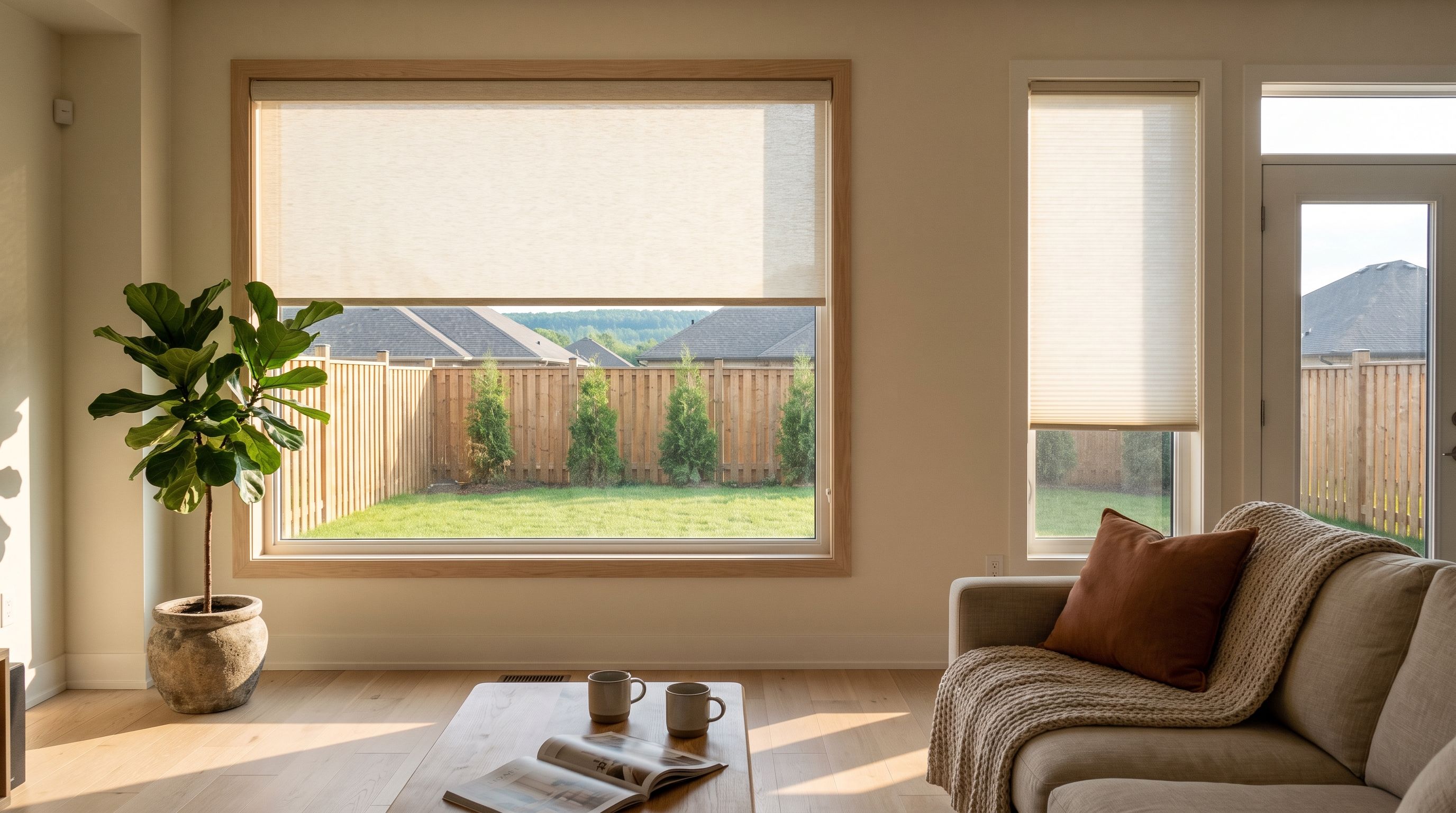
Milton has filled with young families faster than almost any town in the country, and its days start accordingly — often before six on a June morning, in a child's bedroom, behind whatever the builder left on the window. We make the blinds those hours actually call for.
Blinds Company · Rated 4.8 out of 5 on Google
Free in-home measure · open 8am–9pm, 7 days
- Dawn arrives over open ground
- Nothing stands east of the newer streets, so blackout here is decided at the edges of the blind rather than by the cloth.
- Nap-time dark is the strict test
- Midday sun lights every small leak from behind, which is where a blind bought by width alone gives itself away.
- The builder's package fits nobody
- One roller ordered by the hundred hangs from the ensuite to the nursery, and only the rooms with a difficult hour need changing.
- Old Milton keeps other hours
- The old core's trees are generations old, so its hard season is winter, when the branches are bare and the sun runs low.
In short
Most of Milton went up in the last twenty-five years, street after street of builder windows in standard sizes, dressed — where they were dressed at all — in one specification for the whole block. But a family's day is not standard. It has a 5:45 wake-up, a midday nap, dinner cooked into a west-facing glare and an evening with the main floor lit while the street outside is dark. Each of those hours wants a different fabric in a different room, and sorting that out is what the free measuring visit is for.
Inside this pageJump to one of 6 topics
A town that gets up early
Every town has a rhythm, and Milton’s is set by its children. The subdivisions that spread across Hawthorne Village, Beaty, Scott, Harrison, Ford and Clarke in the last two decades filled with young families almost as fast as they were built, and a young family’s day is a timetable: up with the smallest person in the house, nap defended at midday, dinner at the busiest hour of the kitchen, and an evening that begins when the bedroom doors finally close.
Windows sit inside that timetable, and mostly on the wrong side of it. The bedroom is bright at a quarter to six in June. The nap room glows at one. The west kitchen glares exactly while dinner is being made. None of this is bad luck — it is just sunlight meeting a house that was dressed, if it was dressed at all, in one specification chosen for a whole street at once.
The builder’s blind was chosen for nobody
A builder’s window package is a reasonable thing: one light roller or thin venetian, ordered by the hundred, hung everywhere from the ensuite to the nursery. It was never wrong so much as unaddressed — a blind for the average window of an average house, and no family lives at the average.
The useful move is not to replace it wholesale. It is to walk the house by the clock. Which room has a bad 5:45? A bad 1pm? A bad 6 in the evening?
Those rooms — usually three or four of them — are carrying the whole cost of the one-size answer, and they are where a made-to-measure blind changes how the day actually goes. The hallway can keep what it has forever.
Dawn over open ground
East of a new subdivision there is often nothing at all: farmland, a future phase, a horizon. Milton’s newer streets also have no tree canopy yet worth the name — the saplings are in, and their contribution for now is moral support. So a June sunrise here is delivered whole, early, and directly into any east-facing bedroom on the block.
That makes the blackout question sharper than it is in an older town. This is covered honestly on the blackout page, but the short version belongs here: the cloth blocks the light, and the fit decides whether the room is dark. In a bright new bedroom the difference between a blind bought by width alone and a blind measured to its own opening is the difference between a child who wakes at dawn and one who wakes when the house does.
Dinner against the glare
The other end of the family day belongs to the west side of the house — the kitchen and great room where a low evening sun arrives at counter height precisely during the busiest domestic hour there is.
Blocking it outright is the blunt fix and usually the wrong one, because it takes the back yard with it and the yard is where the rest of the family is. A woven screen dims the blow while keeping the sightline; a zebra blind goes one further and lets the same window run sheer through the afternoon, then close solid once it is dark and the lit kitchen becomes the street’s television. Two problems, one blind, adjusted by the hour — which is the way this whole town runs anyway.
Old Milton keeps different hours
The streets around the old core are the exception to everything above, and a pleasant one. The trees are generations old, the houses smaller and more private, and summer light arrives there already strained through a canopy the new subdivisions will not own for decades.
Old Milton’s difficult season is winter, when the branches are bare and a low sun crosses rooms that needed nothing from May to October. Its windows are older too, each one slightly its own size, which is less a problem than an instruction: measure each one, assume nothing, and choose fabrics against the January light rather than the July shade.
Rows that face each other
Milton’s townhouse streets add one more hour to the list: the late one. Facing rows sit close, living floors level with each other, and once it is dark every lit window is on show to its opposite number across the street.
Daytime there is easy — the rooms are bright and nobody can see in against the daylight. The specification is really about the evening: something that closes properly once the lights go on, ideally without giving up the daytime openness that makes a small floor plan feel bigger. That is the day-night trade again, and it is the single most common conversation we have in these communities.
The visit is the same everywhere in town: free, unhurried, phones open 8am–9pm all week. We measure the windows that matter, hold fabrics up at something near the hour the room misbehaves, and leave a written quote with the installation date committed in ink. The nap schedule is respected. We have been to Milton before.
Hour by hour
The same window, four times over
7am
Milton's loudest hour. East of the newer streets the land opens onto farmland and a future phase, and the young trees are years from casting anything worth the name, so a June sunrise is delivered whole into any east-facing bedroom on the block. The cloth blocks the light; the fit decides whether the room is dark.
Noon
The nap hour, and the strict version of the same brief. At night a near-dark room passes; at one in the afternoon the sun is at full strength and every small leak is lit from behind like a sign. This is the hour where edge fit and snug mounting stop being refinements.
6pm
Dinner runs straight into the glare. A low western sun reaches counter height in the kitchen and great room during the busiest domestic hour there is, and blocking it outright takes the back garden with it — which is where the rest of the family happens to be.
After dark
Milton's townhouse rows face each other closely, living floors level, so once the lights go on every lit window is on show to its opposite number. Daytime is easy there; the whole specification is really about the evening, and about not giving up the openness a small floor plan needs.
Room studies
Three ways to answer the light
Editorial room studies illustrating the brief — not photographs of client installations.
Inside the city
We measure across Milton, not from a showroom in it.
- Old Milton
- Hawthorne Village
- Beaty
- Scott
- Harrison
- Ford
- Clarke
- Bronte Meadows
Those are the parts of Milton we are asked for most often — not the edge of where we go. If your street is not on the list, it is still on the route.
The rest of the range
Everything else we fit in Milton
Winds onto a tube
Tilts to aim the light
Folds up out of the way
Slides across the opening
And the fitting itself
Our commitment
We measure it. If it does not fit, we remake it.
The visit is free. See the samples at your own window, get the quote, then decide.
Before you call
Questions worth answering before you book.
Our toddler wakes with the sun. What makes a bedroom properly dark?
Two things, and most rooms only have one of them. The first is blackout fabric, which any shop will sell you. The second is the fit — because a dark cloth hanging loose in a bright opening simply draws a glowing frame around itself, and children are excellent at noticing glowing frames. Sized tight to the opening, or run in side channels, the same fabric takes the room to genuinely dark. Cordless operation is our standard in children's rooms, at no charge, as a matter of policy rather than request. The [blackout blinds](/blackout-blinds/) page covers the fit question properly.
Is darkening a room for a midday nap different from darkening it for night?
Harder, and it helps to know why before buying anything. At night a near-dark room passes; at one in the afternoon the sun is at full strength and every small leak is lit from behind like a sign. Nap-time dark is the strict version of the brief — it is where edge fit, snug mounting and a fabric with real opacity stop being refinements and become the actual job.
The builder's blinds came with the house. Which are worth keeping?
Judge them by the hour, not by the room count. A landing or a powder room has no difficult hour, so whatever hangs there is already doing everything required of it. The rooms with real hours — where someone sleeps past dawn, naps at noon, cooks into the evening sun — are where one street-wide specification was never going to fit, and where a measured blind visibly earns its price. Changing everything at once mostly buys sameness.
The kitchen faces west and dinner time is a squint. What fixes it?
A screen fabric, most often. It is woven to knock the shine and much of the heat out of a low sun while the yard stays visible, so the room is calmer without going dim while you cook. Where the same window also looks into a neighbour's, a zebra blind adds the option of closing solid in the evening — same window, two settings, chosen by the hour.
Does the escarpment change anything about the light in town?
At the edges, literally. Streets tucked closest under the ridge on the west side lose the sun a little sooner than the middle of town, which quietly softens their evening problem. Meanwhile the east side of town opens onto flat country, so nothing stands between a June sunrise and an east-facing bedroom. The two edges of one small town can genuinely need different windows treated first.
The house is two years old. Any reason to wait before fitting blinds?
None. New frames are true, the openings are consistent, and there is nothing structural that needs to happen first — the tiny movements a new build makes in its first years are smaller than the tolerances a properly measured blind already allows for. Waiting mostly means another summer of five o'clock daylight through a bare or borrowed window.
What does the visit cost in Milton?
Nothing, and it carries no obligation. We measure every window you care about, try fabrics in the room's own light, and leave a written quote priced line by line with your installation date committed on it. No deposit, no card, and no penalty for sleeping on it — which, in this town, everyone could use more of.
The last chapter
We bring the samples to your windows.
We come to you, measure at your own windows, and go through fabrics and fits together. The visit costs nothing.
$99 off when you order three or more blindsApplied to your written quote at the measure.
Rather just talk?(437) 782-5452Answered 8am–9pm, 7 days
Free in-home measure
If a single bedroom in Hawthorne Village wakes with the sun all June, that is a one-window job and still worth the call.
Answered 8am–9pm, 7 days.
Page last checked 16 August 2026.