The range
Zebra blinds in Brampton
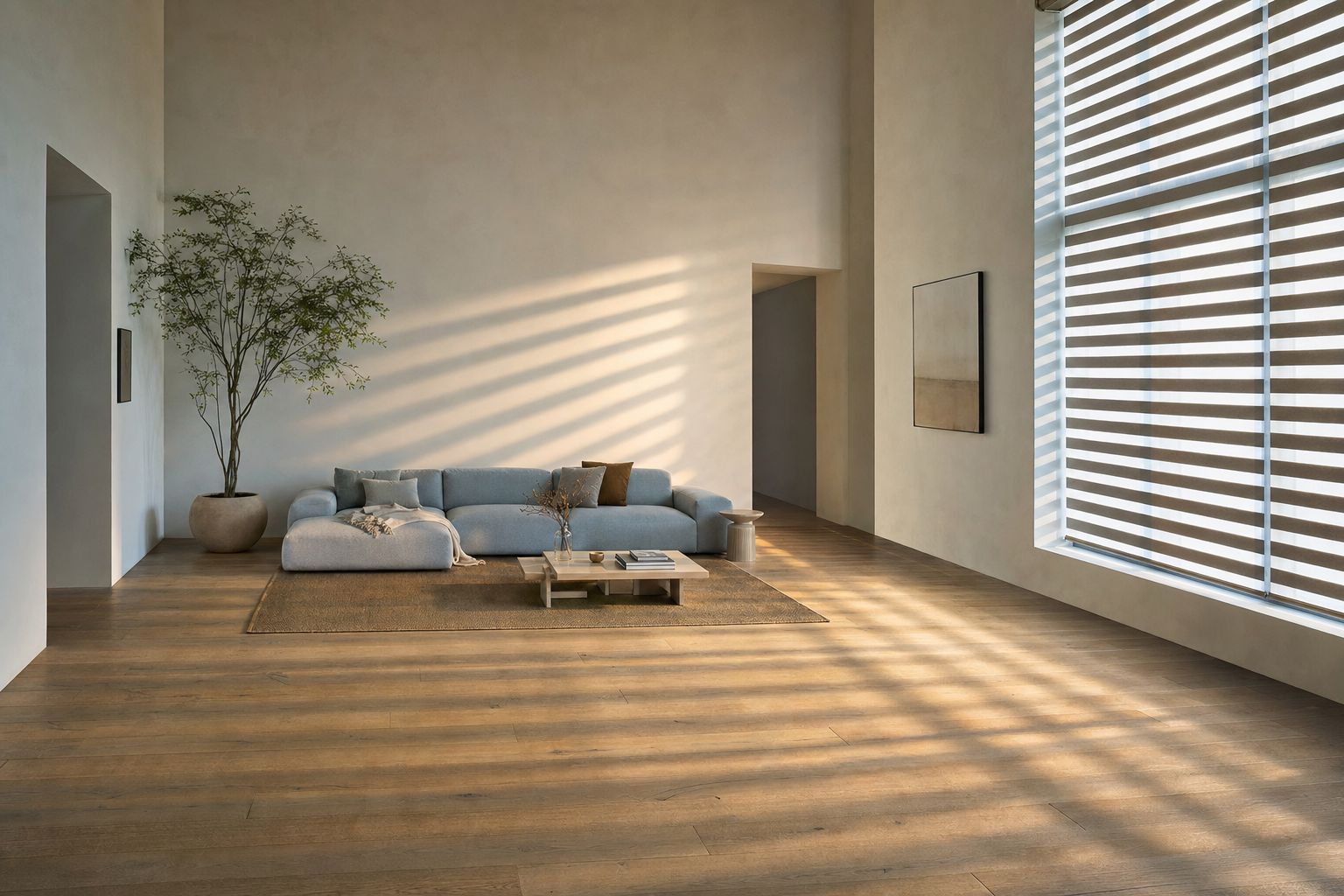
Zebra blinds for the Brampton rooms built around big glass. A newer great room takes the whole day straight — morning sun at one end of it, a hard western afternoon at the other — and the single blind position that suits ten o'clock is wrong again by four.
Blinds Company · Rated 4.8 out of 5 on Google
Free in-home measure · open 8am–9pm, 7 days
- The sheer band does canopy work
- Until this street's trees grow up, that weave is the only thing standing between the room and an open sky.
- Judged at your worst hour
- We book the visit for the time of day the room misbehaves and hold the samples up at your glass while it is happening.
- Eye level, not the roofline
- The glass up near the roof has one constant job, so the adjustable product goes where the adjusting actually happens.
- Depth checked before fabric
- A zebra needs more room front to back than a plain roller, and the reveals in newer houses are shallower than they look.
In short
Zebra blinds suit Brampton's big-windowed great rooms because the light there swings hard across the day, and sliding sheer and solid bands give the room a new setting for every hour instead of one compromise held from breakfast to bedtime.
Inside this pageJump to one of 5 topics
A room that changes its mind every two hours
Brampton’s newer houses gather their glass into one place. The great room at the back, or the family room folded into an open kitchen, carries a window sized for the elevation drawing — wide, tall, sometimes both — and the room behind it hosts the entire day: breakfast, homework, the call you take at the counter, the show after dinner.
A window that big does not have one light. It has a rotation of them. Soft and angled in the morning, high and harmless at noon, then the long western delivery that starts mid-afternoon in summer and lands straight across the room at eye level. Ask one fixed blind position to serve that rotation and it will be wrong for most of it — chosen for the worst hour and dimming all the others, or chosen for the pleasant hours and useless at four.
The product this page is about was built for exactly that arithmetic. Not a better single position; the end of single positions.
Streets too young for shade
Established neighbourhoods get half their light control free, from the canopy. A mature tree in front of a window is a seasonal blind — leafed out against the summer sun, bare when the winter light is wanted — and older streets are full of them.
A newer Brampton street is not, yet. The trees are saplings on their way to being that canopy in a couple of decades, and until they arrive there is nothing between the sky and the glass. The sun reaches a new subdivision window unsoftened in July and, bouncing off snow, surprisingly fierce in January. Whatever moderating the street cannot do yet, the window covering does alone.
That is the honest context for choosing fabric here. The sheer band is doing canopy work — taking the edge off open sky — so its weave matters more than it would on a shaded street, and the solid band takes the direct hits. Both get chosen against your own glass, in the actual light, because a sample card in the shade of a showroom has never met your four o’clock.
The day, hour by hour, at the back of the house
What owning one is actually like, told as a day.
At eight the low sun comes across the neighbouring roofs and finds the kitchen end of the room. The bands go to a half-offset for an hour, and breakfast happens without anyone squinting at the table.
By late morning the sun is high and polite. The bands align, the wall of glass opens, and the room runs on daylight — this is the position the window was bought for, and on a zebra it is a setting rather than a stroke of luck.
Mid-afternoon the western hour begins. A slide of a few centimetres breaks the glare off the television and the counter while the room stays bright; nobody has surrendered the day, and nothing has gone dark.
At dusk the solids close over the sheers. The glass that was a view all day would otherwise become a lit display facing the yard and the street, and the closed bands end that while the room keeps its softness.
Four settings, one blind, no ceremony. Motorised, the two that repeat daily can simply happen on a schedule.
Level with your eyes, not the roofline
The two-storey version of these windows deserves its own paragraph, because the instinct is to treat the whole height as one covering problem, and the day-to-day truth is smaller.
Everything that changes hour to hour — glare on a screen, privacy at dusk, the breakfast sun — happens in the band of glass you live level with. The glazing up near the roofline has a single, constant job all year: admit light, and not too much heat. A product whose whole value is adjustability is wasted on glass nobody adjusts.
So the arrangement we quote most on these windows puts the zebra where the living happens and something simpler above it, or nothing above it at all if the upper glass is not actually misbehaving. The elevation still reads as one window from the street, because the street sees the backing, and backings match across products. The budget, meanwhile, concentrates where the benefit is — which is the difference between covering a window and specifying one.
The measure, at the misbehaving hour
We will ask on the phone when the room is at its worst, and that is when we come. The visit costs nothing, the phones are open eight to nine every day of the week, and the samples are judged against your glass in the exact light they will have to manage.
Newer construction gets one particular check before any talk of fabric: depth. The reveals in these houses are shallower than they look, and a zebra needs more room front to back than a plain roller. Where the opening will not take it, the blind mounts on the face of the wall or up on the ceiling line — which works, and looks intentional, and is a decision we make with a tape in hand rather than an apology after the fact.
Wide openings are split honestly at a mullion when a single span would be asking too much of the tube, and we say so before ordering, not after. The quote arrives in writing with every opening on its own line and your installation date stated on it. No deposit, no card, and no obligation travelling with any of it.
Hour by hour
The same window, four times over
7am
Low sun crosses the neighbouring roofs and lands at counter height in the kitchen end of the room. A half-offset is the whole answer, and the point of it at seven is that the room stays daylit — because the alternative most houses settle for is a plain blind pulled halfway down at breakfast and left there until bedtime.
Noon
High sun is the sheer band's shift, and on a street this young that band is doing the work a mature tree would otherwise be doing for free. Which makes its weave a larger decision here than on an established block: there is no leaf cover behind it to help, and nothing at all between the room and open sky.
6pm
The western hour is what people actually call about. The sun arrives level, straight across the screens and the faces, and a few centimetres of offset takes the glare out without dimming the room. What it will not do is undo the heat that has been building since two — a blind blunts that load, it does not remove it.
After dark
Solids closed, the glass stops being a lit display facing the yard and the street. What the closed bands buy is privacy rather than darkness, which is exactly right for a family room and exactly wrong for the bedrooms — those want a blackout product doing one job well, and it will shorten your quote to say so.
In the room
How the choice changes the room
The rest of the range
Everything else we fit in Brampton
Tilts to aim the light
Folds up out of the way
Slides across the opening
And the fitting itself
Written for this product
Zebra blinds in the GTA
Our commitment
We measure it. If it does not fit, we remake it.
The visit is free. See the samples at your own window, get the quote, then decide.
Before you call
Questions worth answering before you book.
The afternoon sun makes our family room unusable. Will a zebra actually fix that?
That is the hour the product exists for. Offsetting the bands part-way knocks the glare off screens and faces while the room stays daylit, and when the sun drops behind the houses you slide them open again and the window is a window. For glass that faces due west the fabric matters — a denser solid band and a tighter sheer hold up better in that hour — which is why the samples go up against your own glass at four in the afternoon rather than at noon on a showroom wall.
Our great-room window runs two storeys. Does the whole thing need zebra blinds?
Usually only the part of it you live level with. The band mechanism earns its price where settings change through the day, and settings change at eye level — the glass up near the roofline has one constant job, letting light in without cooking the room, and a simpler covering or none at all does that for much less. From the street the window still reads as one piece, because what the street sees is the backing, and backings can be matched.
Will they do anything about the heat?
Something real, though not everything. Any fabric between the sun and the room intercepts part of the load before it lands on your floor, and the solid bands intercept more of it than the sheers. What a blind will not do is stand in for air conditioning on a July afternoon behind a wall of west glass. We will tell you honestly at the measure how much of your problem is glare, which a zebra handles well, and how much is heat, which it only blunts.
Can they run on a schedule, so the room adjusts itself?
Yes — the assembly motorises as easily as a plain roller, and a motorised zebra can follow the day on a schedule: bands offset before the western hour arrives, open again once it passes. In a room where the reason to adjust arrives every single afternoon, that is the difference between a setting that exists and a setting that gets used.
We have young kids in that room all day. Anything to know?
The lift is cordless in any room a child uses, at no extra charge — that is our default rather than a request you have to remember to make. Motorising goes a step further by removing even the habit of reaching for the blind, which on a big low window with a play area in front of it is worth considering for convenience as much as for safety.
Do the bedrooms need the same thing?
Almost never, and it will shorten your quote to say so. A zebra cannot make a room properly dark — the closed bands are private, not blackout — and a bedroom's requirement is darkness first. The zebra belongs in the living zone, where the light changes by the hour; the bedrooms want a blackout product doing one job well. We would rather quote you two right answers than one product everywhere.
The last chapter
We bring the samples to your windows.
We come to you, measure at your own windows, and go through fabrics and fits together. The visit costs nothing.
$99 off when you order three or more blindsApplied to your written quote at the measure.
Rather just talk?(437) 782-5452Answered 8am–9pm, 7 days
Free in-home measure
If your great room has a beautiful window and one unusable hour a day, that hour is precisely the thing the free visit is for.
Answered 8am–9pm, 7 days.
Page last checked 16 August 2026.