The range
Zebra blinds in Vaughan
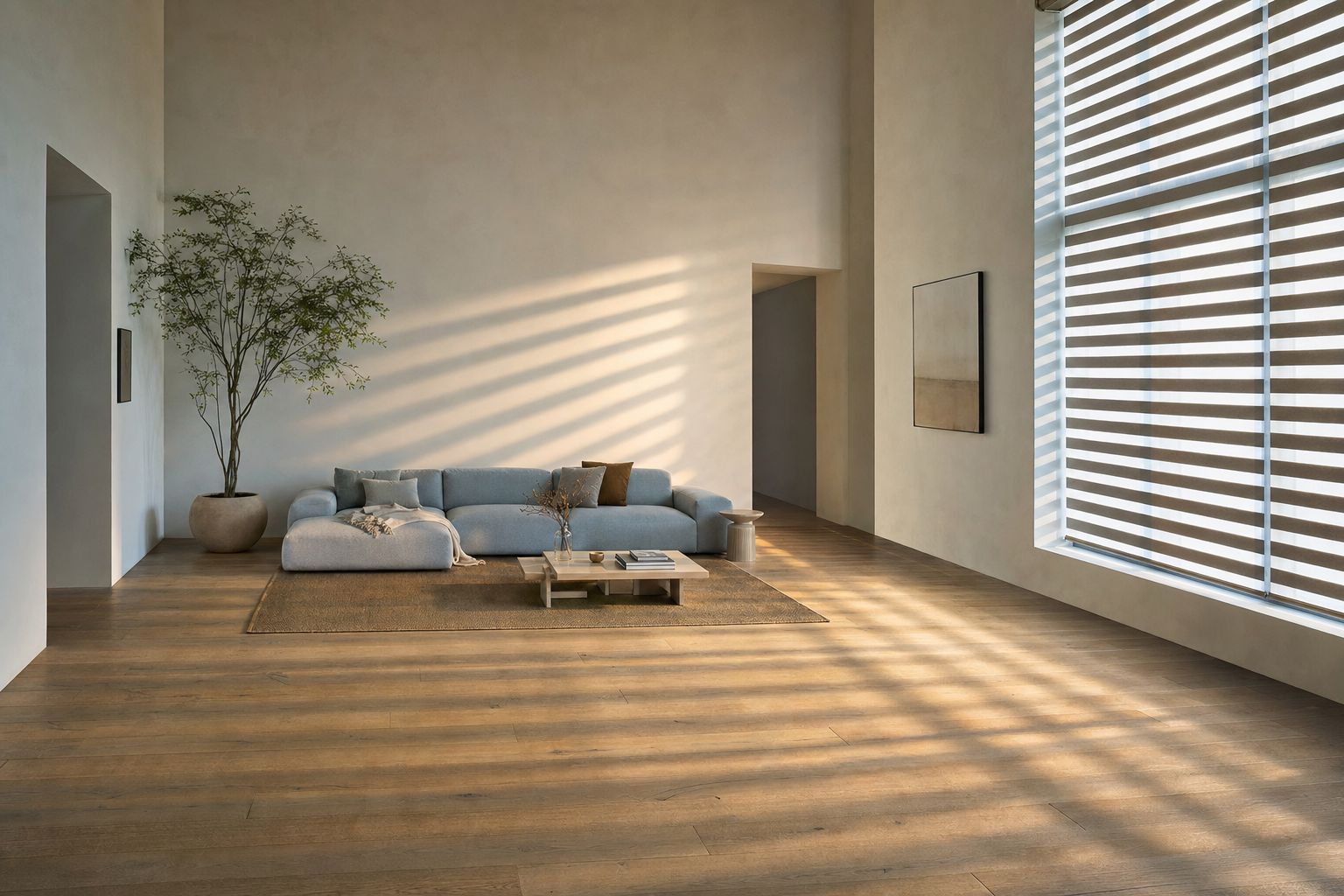
Zebra blinds for the back wall of a Vaughan house — the run of glass the kitchen, the breakfast table and the family room all share. Three rooms keeping three different hours on one wall is exactly the job for a blind that treats every position between open and closed as a real place to stop.
Blinds Company · Rated 4.8 out of 5 on Google
Free in-home measure · open 8am–9pm, 7 days
- Same kind, different state
- One fabric and one plane across the whole run, with every opening left free to hold its own position.
- Every opening measured
- Built openings that look identical rarely are, and a blind cut to its neighbour's numbers is the one that never quite sits right.
- The sink window is a judgement
- A short opening loses more of its view to the rolled bulk, so a plain roller matched to the run is sometimes the better answer there.
- Grouped or split on one remote
- Motorised, the wall can move as one, keep a control per room, or do both, with a scene for the settings you return to daily.
In short
Zebra blinds suit the glazed back run of a Vaughan plan because the kitchen, breakfast area and family room keep different hours on the same wall — and one banded blind per opening lets each room hold its own setting while the wall still reads as a single surface.
Inside this pageJump to one of 4 topics
One wall of glass, three rooms deep
Somewhere behind every newer Vaughan kitchen is the wall that sold the house: a run of glass across the entire back, serving the kitchen at one end, the breakfast table in the middle and the family room at the far side. Three rooms by name — but one unbroken sightline, which means whatever goes on that glass is seen all at once, from every seat, all day.
That is a harder brief than it looks. Treat the wall as three separate decisions and it reads as three mismatched answers hanging side by side forever. Treat it as one decision and you have flattened three genuinely different rooms into a single compromise — the kitchen does not live by the family room’s light, and never has.
What the wall actually needs is a covering that can differ in state while staying identical in kind: the same fabric, the same bands, the same clean plane at every opening, each one free to hold its own position. That is not a workaround for a zebra blind. That is the product description.
Same wall, different hours
Walk the run through a day and the case makes itself.
The kitchen end works the morning. Bands open early — the first light is the point of a kitchen — then a half-step of offset when the sun clears the fence line and lands on the counter where it argues with a knife or a screen.
The middle keeps table hours. Breakfast wants brightness without anyone squinting over cereal; by lunch the glass can stand wide open; homework at that table in the late afternoon wants the glare gone and the daylight kept — the exact middle positions a two-state blind does not have.
The family room end works the evening shift. Open through the day for the yard; a deeper offset when the low sun crosses the television; solids closed after dark, when a lit room beside a dark yard would otherwise face backwards.
Three schedules, one wall, no negotiation — because each opening holds its own answer and gives it up in a second. And this, incidentally, is why chasing millimetre band alignment across the whole run misreads the product: the settings are meant to differ by room. The wall’s unity comes from the fabric and the plane, not from every band standing in parade formation.
The yard behind the glass
The back of a Vaughan lot is more social than the front. The yard faces other yards, and second-storey windows of the houses behind look over the fence line that shields the ground. Daylight is unbothered by this — with the bright side outside, the sheer bands give the run its privacy without costing it the garden.
Evening redistributes the roles. The family room becomes the bright side, and sheer bands with a lit room behind them give back part of what they hid all day. Closed properly, the overlapped solids reduce the room to movement seen from a distance — for most families, on most evenings, entirely enough. Where one end of the wall runs late and bright every night, that opening alone can carry an opaque layer behind its zebra, and the wall keeps its face while the one room that needed more gets it.
That is the pattern for the whole run, really: adjust states, not products. The wall stays one thing; the rooms stay themselves.
Measured as a run, ordered as windows
The visit treats the wall both ways, because both matter.
As a run: fabric and backing chosen once, in the room’s own light at the hour you dislike most, so the wall reads as a single surface inside and out. The sink window gets its honest conversation — on a short opening this product’s rolled bulk costs more of the view than it does elsewhere, and if a plain roller serves that one window better, you will hear it from us first.
As windows: every opening measured on its own numbers, never copied from its twin, with depth checked against these houses’ shallower reveals before any promise is made about mounting inside them. Where the reveal will not take the assembly, the run mounts on the face or the ceiling line as one consistent decision — stated at the measure, priced on the spot.
The quote leaves in writing, one line per opening, installation date included in ink. Cordless is the standard wherever children live, at no charge, and the motorised version of the whole wall is quoted alongside if you want to see both numbers. Nothing owed, no card — the phones are open eight to nine, seven days, and the kettle is your only obligation.
Hour by hour
The same window, four times over
7am
The kitchen end is the only part of the wall in use, and it wants everything the morning has. Bands open, the run reads as plain glass — and the wall's unity at this hour comes from the fabric being identical rather than from the settings matching. Three openings can sit at three positions and still look like one surface.
Noon
By midday the wall is being looked through rather than adjusted, and what is on trial is the plane. Anything that gathers, swags or stacks at this width turns a clean run into a row of decorations. Bands on a tube stay flat, so the glazing keeps reading as part of the architecture instead of as something hung on it.
6pm
The family room end takes the low sun straight across the television while the kitchen end is perfectly fine, which is the entire case for one blind per opening on a shared wall. A single covering for the whole run would have to be set for its worst window and endured at every other one on the wall.
After dark
Closed, the run turns the back of the house from a lit stage facing other people's yards into a quiet surface. The second-storey windows behind you see movement rather than detail, which is enough on most evenings — and where one end of the wall lives late and bright, that opening alone can carry an opaque layer.
In the room
How the choice changes the room
The rest of the range
Everything else we fit in Vaughan
Tilts to aim the light
Folds up out of the way
Slides across the opening
And the fitting itself
Written for this product
Zebra blinds in the GTA
Our commitment
We measure it. If it does not fit, we remake it.
The visit is free. See the samples at your own window, get the quote, then decide.
Before you call
Questions worth answering before you book.
Can the whole back wall run from one remote?
Yes — motorised, the run can be grouped so the wall moves as one, split so each room keeps its own control, or both at once, with a scene for the settings you return to daily. On a wall the household adjusts several times a day, that is the version people end up glad they chose. The manual version works too; it just asks you to walk the wall.
The openings all look identical. Can you measure one and copy it?
We measure every one, precisely because they look identical. Built openings vary by small amounts that matter to a product whose bands must run true, and a blind cut to its neighbour's numbers is how a run ends up with one unit that never quite sits right. Each opening goes on the order under its own measurements, and any that disagrees with its twins is ours to have noticed.
Is a zebra the right thing over the kitchen sink too?
Sometimes honestly not, and we will say so at the measure. The sink window is often the shortest opening on the wall, and a zebra's rolled bulk takes a larger bite of a short window than of a tall one — a plain roller can be the cleaner answer there, matched to the run by colour and backing so the wall stays coherent. That one window is a judgement call, and it is better made standing at the sink than assumed from a plan.
Do they give privacy from the houses behind us in the evening?
Daytime privacy is the product's strong suit; evenings are its honest compromise. Closed, the solid bands overlap and a lit family room shows the yard movement rather than any detail — for most households that is exactly enough. If your family room runs late and bright and the sightline from behind genuinely bothers you, the answer is an opaque layer on that opening alone, and we would rather add one line to the quote than oversell the bands.
Is the lift safe with kids climbing the breakfast bench?
The lift is cordless as standard in any room children use, at no extra charge — nothing hangs within reach on the glass beside the bench. Motorising the run removes even that interaction, which on a wall of glass at toddler height is as much about fingerprints as safety, but the cordless default is the floor we start from, not an option we upsell.
The last chapter
We bring the samples to your windows.
We come to you, measure at your own windows, and go through fabrics and fits together. The visit costs nothing.
$99 off when you order three or more blindsApplied to your written quote at the measure.
Rather just talk?(437) 782-5452Answered 8am–9pm, 7 days
Free in-home measure
If three rooms are negotiating one wall of glass every day, the negotiation is what the free visit is for.
Answered 8am–9pm, 7 days.
Page last checked 16 August 2026.