The range
Zebra blinds in Toronto
Zebra blinds for the Toronto rooms that live closest to the street. On the older blocks the front window and the sidewalk are near neighbours, and the room behind the glass needs its privacy by degrees — because the one thing it cannot spare is its daylight.
Blinds Company · Rated 4.8 out of 5 on Google
Free in-home measure · open 8am–9pm, 7 days
- Privacy in degrees
- A window a few paces from the sidewalk needs one setting for a busy street and a different one for an empty street.
- The porch has taken its share
- A covered Toronto porch shades the front glass in every season, so the fabric is chosen to brighten the closed state rather than deepen it.
- Depth measured, not assumed
- A century reveal looks generous and is rarely empty — trim, latches and decades of paint eat the room this product needs.
- Tall narrow openings suit it
- The mechanism runs light on a vertical window, and the banded fabric flatters the proportion of an older sash.
In short
Zebra blinds give a Toronto front room its privacy in degrees — sheer and solid bands sliding past each other on one roller — so a window a few steps from the sidewalk can stay bright all day without putting the room on view.
Inside this pageJump to one of 5 topics
The closest audience a window can have
The older streets of this city were built close. The lot is narrow, the porch takes half of the front garden, and the sidewalk begins where the porch steps end — so the distance between a stranger and your living room is a handful of paces, and the window between them is the largest one in the house.
People solve this badly for years before they call anyone. A roller kept permanently half-lowered, so the room lives under a low fabric sky. A net sheer that went up one summer and never came down. In the saddest version the sofa is turned to face away from the street, which means the best light in the house spends its day on the back of a couch.
None of that is a character flaw. It is what happens when a window whose exposure changes by the hour is given a covering with two positions. The sidewalk is busy at eight, empty by ten, busy again when the school lets out, and quiet after nine — and no single setting of any blind is right for all of it.
Privacy that arrives in degrees
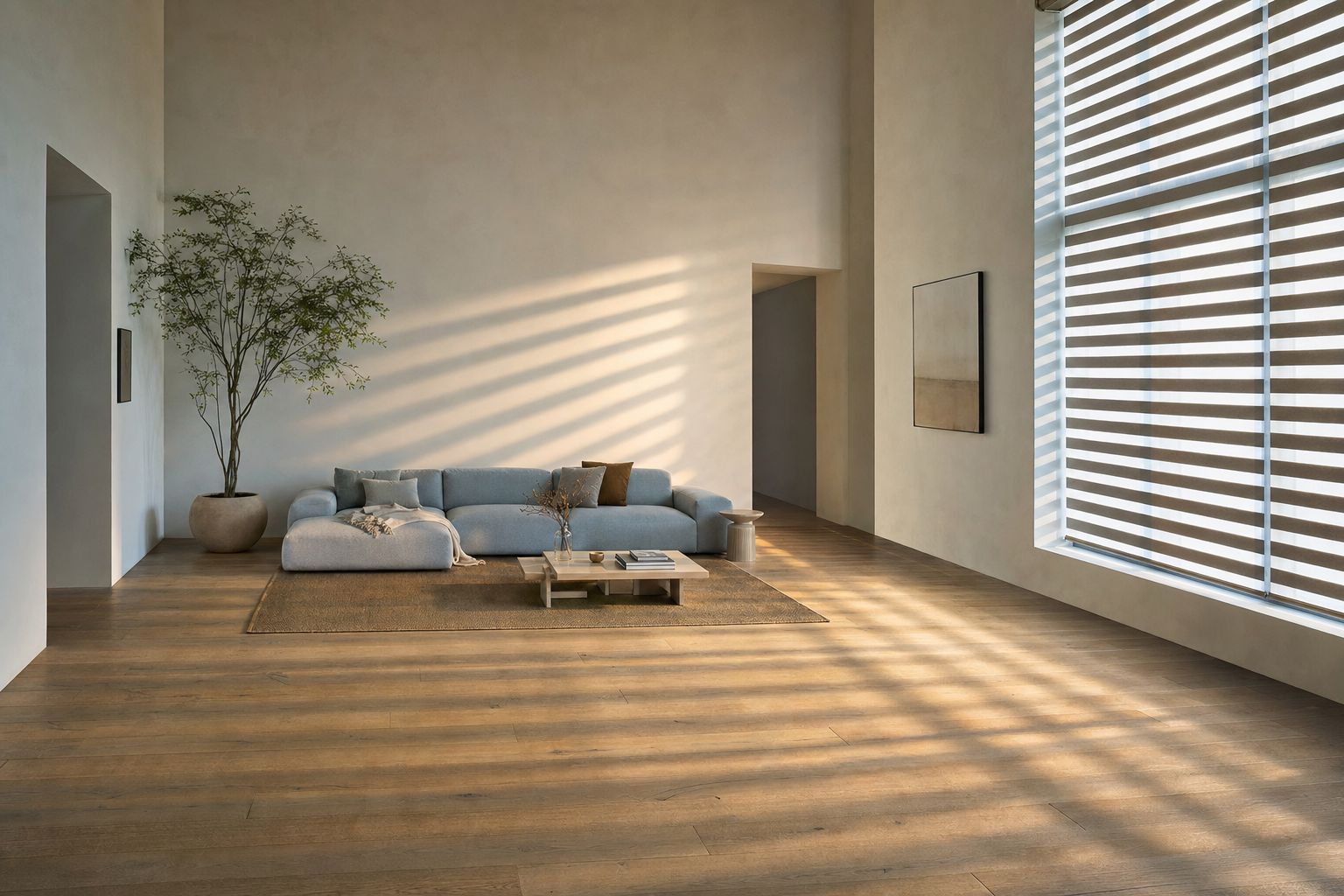
A zebra blind is alternating bands of sheer and solid fabric on one roller, sliding past each other. One way, the window is nearly open. The other way, nearly shut. And every position between the two is stable, deliberate and reversible in a second, which is precisely the vocabulary a street-facing room has been missing.
Mid-morning, sidewalk empty, the bands align and the room takes all of its light. When the street fills, a few centimetres of offset breaks the sightline in without surrendering the view out — you still have the maple, the weather and the comings and goings, while whoever is passing gets bands of texture and nothing worth slowing down for.
The habit forms in about a week, because the adjustment costs nothing. That is the real difference between this and every make-do it replaces: the half-down roller charged the room its daylight every single day, watched or not. A zebra collects only while someone is actually out there.
The room’s job is watching the street
Worth saying, because most privacy products quietly abolish it: a Toronto front room is not trying to ignore its street. It is the room the house watches from. The delivery you are half-expecting, the kid walking back from the corner, the first snow — the point of that window has always been the view out.
Frosted film, café curtains, a permanently drawn sheer: each buys privacy by cancelling the view in both directions, which is to say by retiring the room from its job. The zebra’s trade is different in kind. It dials the window, it never deletes it, and on the many days the street is simply empty it gets out of the way entirely.
The porch has already taken its share
There is a second, quieter reason the front room cannot afford an opaque answer, and it is standing directly over the window. The covered porch is the signature of Toronto’s older housing, and its roof shades the front glass in every season — handsome from the street, and the reason the front room starts each day with less light than any other room in the house.
So the usual privacy fixes punish this room twice: they solve the sidewalk and deepen the gloom, in the one place with no light to spare. The specification that works leans the opposite way. A sheer band open enough to feed the room. A solid band pale enough that even the closed state brightens rather than shadows. And the whole range actually used, instead of the blind living shut.
It is also why the samples go up at the window itself rather than being fanned out on a table. Under a porch roof, a fabric that read as airy in a showroom can read as dusk. The window’s own light is the only honest test it gets.
Measured where it will hang
The visit is free and happens on your clock — the phones are answered from eight in the morning to nine at night, every day of the week. The measuring is done at the glass, in the room’s own porch-filtered light, with the fabric pinned up at whatever hour the street actually bothers you.
Older openings get their extra minute. A century reveal is generous on paper and rarely empty in practice — trim, latches and a hundred years of paint all eat into the true depth, and this product asks for more of it than a plain roller does. If the depth is not honestly there, the blind mounts proud of the opening, and that decision is made out loud with you in the room.
You end the visit with the quote in writing, itemised window by window, and your installation date committed on the same page. Nothing is owed on the day, no card is taken, and in any room a child uses the blind is cordless as a matter of course, not as an upgrade.
Hour by hour
The same window, four times over
7am
The sidewalk is busy early on an older street — the school run, the dogs, the walk to the bus — and the front room is at its dimmest, because the porch roof has already taken its share of the morning. A small offset holds the sightline while the bands stay open enough to feed a room that starts every day short of light.
Noon
By mid-morning the street empties and the blind should get out of the way entirely. This is the state the make-do never reaches: a roller kept permanently half-down charges the room its daylight whether anybody is out there or not, and under a porch roof that is a tax this particular room cannot afford to pay.
6pm
Late light comes along the street rather than through the porch, and the front room is finally bright. It is also the hour the sidewalk fills again on the way home, so the bands return to the position that keeps the maple, the weather and the comings and goings while giving whoever is passing nothing worth slowing down for.
After dark
The asymmetry flips. A lit front room behind sheer bands hands part of itself back to the street, and closing the solids reduces what is left to movement rather than detail. For a room that is lived in late with the lamps high, the honest arrangement is an opaque layer behind the zebra, priced plainly at the measure.
In the room
How the choice changes the room
The rest of the range
Everything else we fit in Toronto
Tilts to aim the light
Folds up out of the way
Slides across the opening
And the fitting itself
Written for this product
Zebra blinds in the GTA
Our commitment
We measure it. If it does not fit, we remake it.
The visit is free. See the samples at your own window, get the quote, then decide.
Before you call
Questions worth answering before you book.
Can people on the sidewalk really not see in during the day?
By day the sheer bands work in your favour, because the brighter side of the glass is outside. A person walking past sees a banded, textured surface with nothing legible behind it, while you keep the street, the weather and the daylight. The closer the sidewalk, the more the exact band position matters, which is why we set it with you standing in the room rather than leaving you a manual.
Our front room is already dim because of the porch. Will these make it worse?
They are usually how the room gets its light back. The make-do most porch-shaded rooms live with is a plain blind kept half-lowered from breakfast to bedtime, which taxes the daylight whether the street is busy or not. A zebra opens fully to feed the room the moment nobody is out there, and a light-coloured solid band keeps even the closed state from reading as shadow.
What happens in the evening with the lights on?
The daytime effect runs on the light being outside, and after dark it changes sides — a lit room behind sheer bands returns part of the view to the street. Fully closed, the solid bands overlap and what remains legible from outside is movement rather than detail. For a front room that is lived in late with the lamps high, the honest arrangement is an opaque layer behind the zebra, and we will price that plainly at the measure instead of letting the evening deliver the news.
Do they suit the tall, narrow windows in an older Toronto house?
Very well — a tall narrow opening is light work for the mechanism, and the banded fabric flatters a vertical window. The thing an older opening does demand is a careful depth check, because a century of paint, trim and window hardware narrows the usable reveal, and this product wants more room front to back than a plain roller. Where the depth is honestly not there, the blind mounts proud of the opening, and you hear that at the measure rather than on installation day.
Would frosted film be the cheaper fix for a street-facing window?
Cheaper, and permanent in the wrong way. Film buys its privacy by abolishing the view in both directions, all day, forever — which turns the best window in the house into a lightbox. A front room generally wants its street back the moment the street empties. If a window truly never needs a view, a bathroom for instance, we will say film is the sensible answer there; the front room is rarely that window.
The last chapter
We bring the samples to your windows.
We come to you, measure at your own windows, and go through fabrics and fits together. The visit costs nothing.
$99 off when you order three or more blindsApplied to your written quote at the measure.
Rather just talk?(437) 782-5452Answered 8am–9pm, 7 days
Free in-home measure
If the choice in your front room has come down to watching the street or being watched by it, that is exactly what the free visit settles.
Answered 8am–9pm, 7 days.
Page last checked 16 August 2026.