The range
Blind installation in Toronto
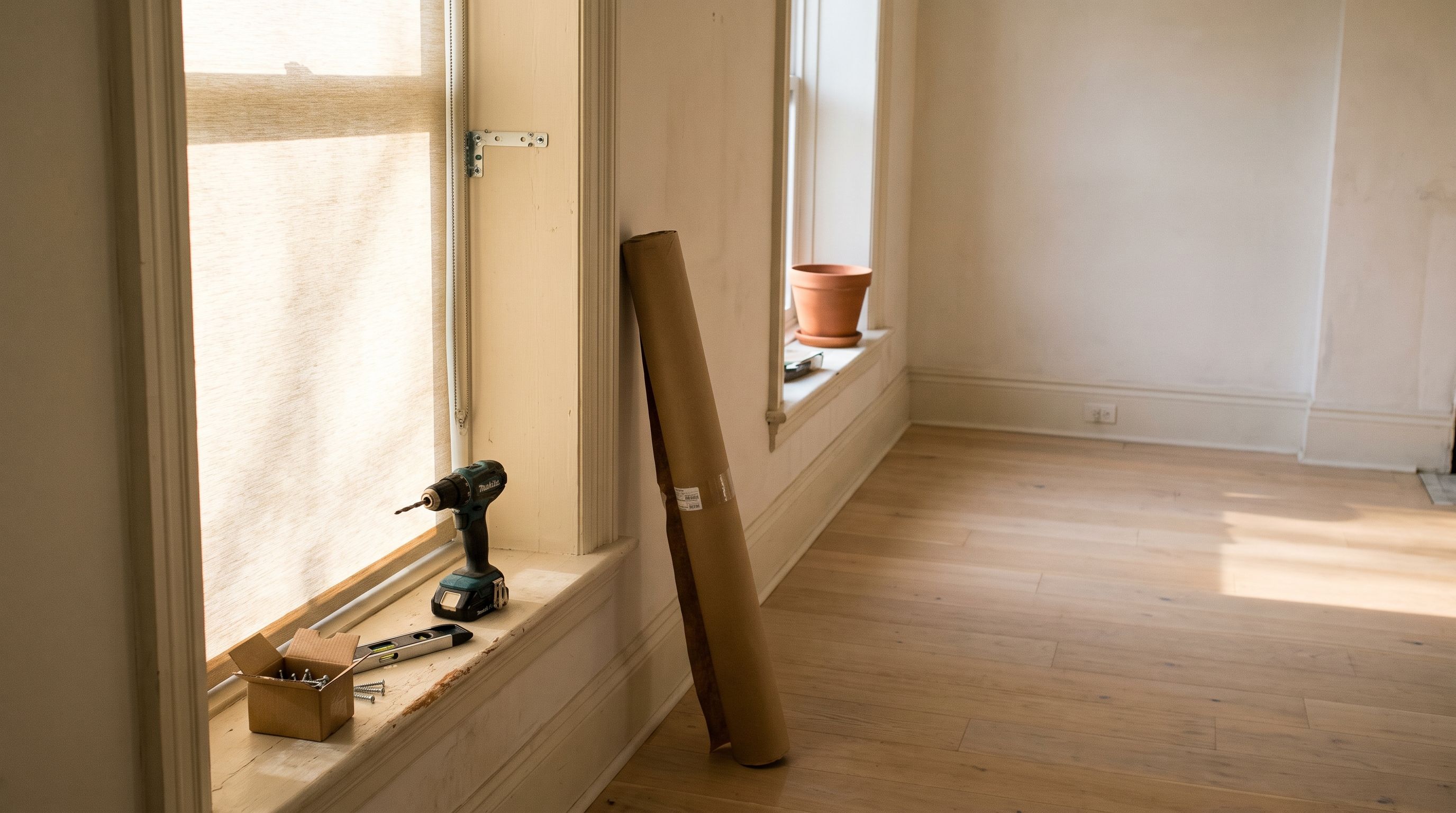
Blind installation in Toronto meets a specific problem before it meets any window: a great deal of this city's housing predates drywall and square frames, and a fitting method sized for a modern build is a fitting method that has already guessed wrong. We fit what we measured and made, into the wall that is actually there — plaster where a newer house would give us drywall, trim worth working around rather than through.
Blinds Company · Rated 4.8 out of 5 on Google
Free in-home measure · open 8am–9pm, 7 days
- Plaster, not drywall
- The fixing is chosen for what an older Toronto wall is actually built from, rather than for the wall the anchor packet imagined.
- Century trim left alone
- Hardware goes into the reveal or the head of the opening wherever the window allows it, so original casing keeps its face.
- Level by instrument
- The headrail is set with a level rather than to a frame that has had a hundred years to settle out of true.
- Free look at old blinds
- Blinds we did not make get an honest opinion instead of a fitting fee — what is wrong, and whether it is worth putting right.
In short
We fit the blinds we measure and make across Toronto, choosing the fixing for what the wall is actually built from — plaster and century trim more often here than the drywall a fitting kit assumes. For blinds bought elsewhere or inherited with the house, we offer a free honest look instead of a fitting fee: what a previous installer got wrong, what the blind itself cannot fix, and whether it is worth remaking properly for the opening it is actually in.
Inside this pageJump to one of 4 topics
What a Toronto wall actually is
Open any fitting kit and study the little bag of hardware: it is a theory of your house. Screws sized for drywall. Anchors that want a clean modern cavity. An instruction sheet whose wall is always new, square and empty.
A great deal of Toronto was built before that theory. Behind the paint of an older room there is plaster — handsome, brittle, and contemptuous of hardware that treats it like drywall. Around the window there is trim that has carried a hundred years and several dozen coats of paint. Above some openings the drill meets something that is neither wood nor plaster and was never mentioned on any sheet.
None of this makes the house hostile. It makes a generic fixing kit naive. The craft here is matching the fixing to the material actually met — and knowing, before drilling, where the sound material is likely to be: often the window’s own frame, which has held everything asked of it since the house was new.
Old trim is a decision, not an obstacle
The woodwork around an older Toronto window is frequently the best thing in the room, and installation is one of the few trades invited to make holes near it. So the approach deserves stating as policy.
Wherever the job allows, the hardware goes where it will never be seen and the trim goes untouched — inside the reveal, into the frame, or to the wall above the casing. Where a window offers no good option except through the woodwork itself, that is a decision, and it is yours: we say what we found, what we would do, and what it costs the trim, before anything happens.
The same temperament applies to the plaster. Old walls have long memories — every previous bracket, every torn anchor, every patched hole is a note about what worked and what did not. We read the notes before adding to them.
Rehangs, and the second first impression
A share of this work involves no new order at all — a set we made is coming down for painters, or a move has put it in front of different windows. If we made the blind originally, going back up is the cheapest correction that exists in this trade: the old holes are advice, not instructions. It is the moment to fix the lean the first installation always had, to move a bracket off plaster that has stopped cooperating, to notice a mechanism telling you its age.
For a set we did not make, the honest starting point is the free look described in the FAQ above, not a fitting quote for a blind we cannot stand behind.
How the visit runs
Tell us on the phone what you need done and roughly how old the house is — in this city, age alone says a great deal about what the wall will be made of. Phones are answered eight in the morning to nine at night, seven days.
At the house, the wall is sounded for what it is actually made of before any commitment, and the honest verdict is given while every option is still open. Then the work — dust sheets down, fixings matched to the material, each blind operated through its full travel before we call it done, and the packaging leaving in our hands rather than in your recycling.
You are told what went where and into what, in writing, which future-you will thank us for the next time a wall needs to hold something. The visit costs nothing, including the honest look at a blind we did not make.
Hour by hour
The same window, four times over
7am
The first thing an old opening tells you is whether the headrail went in level or merely parallel to the frame. Morning sun down an east-facing street rakes across the top of the blind, and a headrail set to a settled frame prints a wedge of light along the trim — visible at seven and at no other hour of the day.
Noon
Midday puts the fixings on trial rather than the fit. The glass heats, the sash timber moves as it has every summer for a century, and a bracket into sound plaster stays exactly where it was put while one into an old patched repair begins the slow loosening nobody notices until the blind is hanging an inch low.
6pm
Evening light arrives low and from the side, and side light is what finds a blind hung square to the room instead of square to its opening: the gap down one edge widens toward the bottom. In a house whose walls have drifted that is decided by the mount chosen at the measure, not by patience on installation day.
After dark
Toronto streets are lit, so after dark a blind stops being about daylight and becomes about edges. Blackout cloth hung a few millimetres shy of a century reveal leaks a bright line exactly where the streetlight stands. The fitting decides whether that line exists, which is why every blind runs to the bottom of its travel before we leave.
In the room
How the choice changes the room
The rest of the range
Everything else we fit in Toronto
Winds onto a tube
Tilts to aim the light
Folds up out of the way
Slides across the opening
And the fitting itself
Our commitment
We measure it. If it does not fit, we remake it.
The visit is free. See the samples at your own window, get the quote, then decide.
Before you call
Questions worth answering before you book.
Will you install blinds I bought online or from a big-box store?
No, and in an older Toronto house that answer matters more than it would somewhere newer. Every promise this service runs on depends on the measurements being ours — if a fitting is wrong, we remake it, because there is nobody else the mistake could belong to. A blind measured outside that chain breaks it, and a careful fitting cannot repair a size that was wrong before it left the box. What we offer instead is a free look: we measure the opening properly, tell you honestly what the blind you have can and cannot do in it, and what made-to-measure would take to put it right. You keep the advice either way.
The blind came with its own screws and anchors. Are they not enough?
They are enough for the wall the manufacturer imagined, which is modern drywall over regular studs. Much of Toronto's housing predates that imagination. On our own installs, packed anchors asked to hold a daily-used blind in an old wall tend to loosen across a season rather than fail on day one, which is the worst way to fail — slowly, above a window you have stopped watching. We fix for the wall that is actually there, and the standard hardware goes in only where it genuinely suits.
Can you take blinds down for painting and put them back after?
If we made them, yes — and it is treated as a fresh fit rather than a return to the old holes. Going back up is the cheapest moment there will ever be to correct what the first installation got wrong: a unit that always sat a little low at one end, brackets straddling an old repair, a blind that fouled the sash. We rehang to the window, not to the old holes, and holes that deserve retiring get retired. For a set we did not originally fit, the free look above is the honest starting point.
My walls are old plaster and previous holes have crumbled. What then?
Plaster rewards patience and punishes force, and a crumbled old hole is information — something about that spot or that technique did not work, and drilling beside it hopefully is how it happens twice. We find what is sound, whether that is the window's own timber frame, solid backing above the opening, or a different position entirely, and if a wall's condition genuinely limits the options, you hear the honest version while there is still a choice to make.
Do you hang curtain rods and tracks as well?
Yes — curtain and drapery installation is part of the same service, and it is the harder discipline on older walls, since a loaded rod pulls on its fixings with every draw in a way most blinds never do. Booking rods and blinds into one visit is common and sensible; it is one ladder, one set of dust sheets and one conversation about what the walls will hold.
What if my old blinds turn out to be beyond saving?
Then the honest visit is worth more than a fitting fee would have been. We tell you what we found — whether it is the fitting, the mechanism, or a size that never suited the window — and what we would do in your place. Sometimes that is nothing at all; sometimes it is measuring the window properly for a blind made to it. Either way the look costs nothing, and nothing is decided until you have the honest version.
The last chapter
We bring the samples to your windows.
We come to you, measure at your own windows, and go through fabrics and fits together. The visit costs nothing.
$99 off when you order three or more blindsApplied to your written quote at the measure.
Rather just talk?(437) 782-5452Answered 8am–9pm, 7 days
Free in-home measure
Living in an older Toronto house with a blind that has never sat quite right, and not sure whether that is the blind or the wall it went into?
Answered 8am–9pm, 7 days.
Page last checked 16 August 2026.