The range
Roller blinds in Toronto
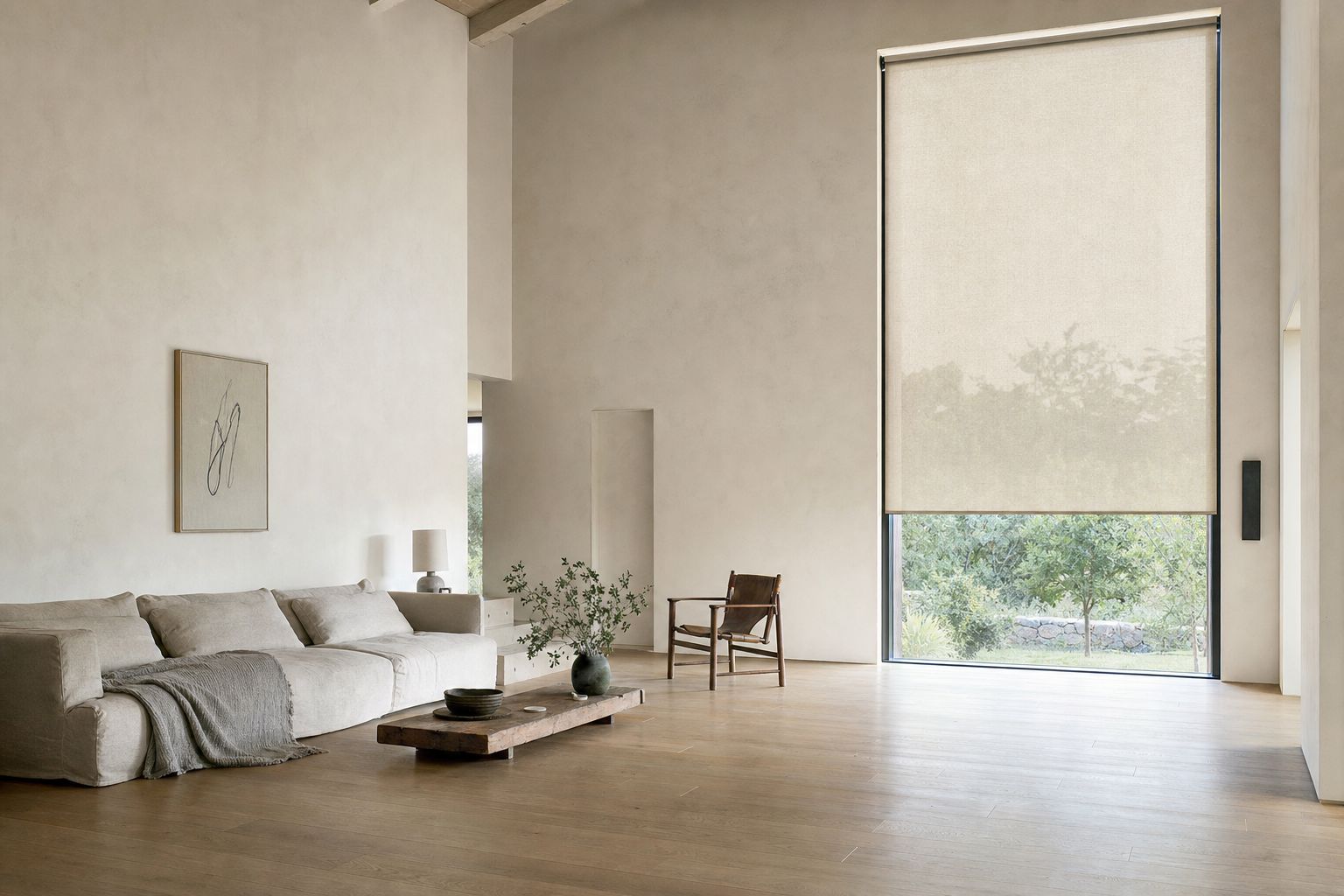
Roller blinds made to your openings and fitted across Toronto. An old house here rarely has one kind of window: the front keeps its original sash, the sides were replaced somewhere along the decades, the back is a newer addition — and a roller specified for one of those is a guess on the other two.
Blinds Company · Rated 4.8 out of 5 on Google
Free in-home measure · open 8am–9pm, 7 days
- One line per opening
- A roller order for an old Toronto house is a list of individual windows, not one decision multiplied by ten.
- Three eras, three mounts
- Original sash, replacement unit and addition glass each leave a different depth behind trim that looks identical from the room.
- The look stays constant
- Fabric, colour and hardware finish are chosen once for the whole house, so mixed mounts never read as mixed blinds.
- Deep reveals, with one caution
- A pre-war opening swallows the entire blind, but a bedroom chasing real darkness still wants overlap on the wall instead.
In short
Across Toronto's older housing we specify each roller to its own opening — original sash, replacement unit and addition glass all take the product differently — and the visit that sorts them out is free, at your home.
Inside this pageJump to one of 5 topics
Three eras in one house
Walk through any older Toronto house with an eye on the windows and you can read its whole biography. The front rooms usually keep the originals — tall wooden sash, deep openings, trim somebody once planed by hand. The side and upstairs windows were replaced somewhere along the way, whenever they got too draughty to defend, by whatever the replacement industry was selling that decade. And at the back, more often than not, there is an addition wearing fully modern glass, from this century, out of a factory.
Three eras, one house — and all three under one roof is the ordinary condition of Toronto housing, not the exception. It matters here because a roller blind meets each era differently. The product is the same clean tube and fabric everywhere; the specification — how it mounts, what depth it has to work with, what the room behind it needs — changes at nearly every opening.
So this page is organised the way the house is: era by era. And the practical conclusion comes first: a roller order for an old Toronto house is a list of individual windows, each with its own line, not one decision multiplied by ten.
What the original sash gives you
The originals are the windows people worry about most and the ones that treat a roller best. What the house’s first builders left you is depth: openings deep enough to swallow the entire blind — roll, brackets, all of it — so the fabric sits inside the window’s own architecture, the trim stays on show, and the headrail effectively vanishes. Modern builds spend money trying to fake the recessed look these openings give away free.
The honest limits, so they are on the record: a blind tucked inside any opening keeps a small working clearance at its edges, which is nothing in a living room and everything in a bedroom chasing true darkness — the dark rooms of the house usually want overlap on the wall rather than elegance in the reveal. And original openings deserve a careful measure rather than an assumed one; a hundred years of seasons leaves each window slightly its own shape, which is one more argument for measuring every opening as itself.
What the replacement window took back
The middle era is the deceptive one. A replaced window looks like a fresh start, but the unit went in the way replacements do — set inside the original opening with its own frame and trim covering the marriage — so some of the depth the opening appears to offer is already occupied. A roller that would have tucked fully into the window’s first incarnation may now stand proud of the glassline, or want the wall above instead.
None of this is a defect; the replacements seal better than what they replaced, and the blind has a correct answer either way. It is simply the era where what you can see from the room floor tells you least, and where the measure does the deciding. As a rule of thumb for reading your own house: the newer the glass, the shallower the seat a blind has behind the trim.
The addition, which is the easy part
The back of the house is where the specification finally relaxes. Addition glass is modern and true, the openings are consistent, and the fits are the quickest of the day — the same windows the suburbs get, transplanted onto a century floor plan.
What the addition inherits instead is the old city’s geometry: backs of houses here overwhelmingly hold the garden, the deck and the afternoon sky, and the addition is usually the kitchen or the family room — the rooms in use exactly when that low light arrives. So the easy windows tend to carry the hardest-working fabrics in the house: screens dense enough to take the glare off a west-facing supper table while the garden stays in view. The roller blinds page covers the fabric families themselves; here it is enough to say the addition is where they earn their keep.
One visit, ten specifications
The measure is a walk through the eras with a sheet of paper: every opening gets its depth checked, its mount chosen, its room’s job noted — dark for the bedrooms, glare control at the back, daylight and privacy in whatever proportion each front room wants. Fabrics and colours get chosen once, for the whole house, at your own windows; the engineering underneath gets chosen ten times, once per opening.
You end with a written, per-window quote and an installation date committed in writing at the order. No deposit, no card, and no charge for the visit — and if some windows honestly need nothing yet, the sheet will say so.
Hour by hour
The same window, four times over
7am
The original front sash usually faces the street, and on an east-facing block that is the window doing the damage at breakfast. A screen roller keeps the street view and takes the beam out of it.
Noon
Mid-house windows in a Toronto semi are often the ones nobody thinks about — side glass, a stair landing — and they are where a roller earns its place, because there is no depth for anything else.
6pm
The back addition is nearly always the newest and largest glass in the house, and it faces the yard. Evening sun there is a heat problem before it is a light one, and the fabric choice changes accordingly.
After dark
Three eras of window means three different reveal depths, and at night that shows up as light leaking around one blind and not the others. It is a measuring answer, not a product answer.
In the room
How the choice changes the room
The rest of the range
Everything else we fit in Toronto
Tilts to aim the light
Folds up out of the way
Slides across the opening
And the fitting itself
Written for this product
Roller blinds in the GTA
Our commitment
We measure it. If it does not fit, we remake it.
The visit is free. See the samples at your own window, get the quote, then decide.
Before you call
Questions worth answering before you book.
Can every window in an old house take the same roller?
The same fabric and the same look, yes — the same specification, almost never. A century house accumulates windows the way it accumulates everything else, era by era, and the original sash at the front, the replacement in the stairwell and the addition glass at the back each meet a roller differently. What stays constant across the house is what you see: fabric, colour, hardware finish. What changes, window by window, is everything you don't — mount, brackets, clearances — and getting that right per opening is most of what the visit is for.
Why would two windows that look the same get different mounts?
Because the depth behind the trim is a fact about the window's era, not its appearance. An original opening carries the full depth the house was built with, and takes a blind tucked completely inside. A replacement unit sits within the old opening with its own frame around it, so part of the depth you appear to have is spoken for — and a blind that would have tucked into the original will stand proud of the replacement, or need the wall instead. Same trim, same paint, different answer.
What do the old deep reveals actually give me?
The nicest inside mounts in the business. A pre-war Toronto opening is deep enough to swallow the whole blind — headrail, brackets, fabric roll — so the window keeps its trim and its shape and the blind reads as part of the opening rather than a thing attached to it. The one caution is bedrooms: any inside-mounted blind carries a small operating gap at its edges, and a room that has to be properly dark usually wants the blind outside the opening with real overlap instead, whatever the reveal would elegantly permit.
The back addition has big new windows. Anything different there?
It is the easiest part of the house, with one warning attached. Addition glass is modern, square and true, so the fits are quick and clean — though the reveals are usually shallow, so blinds sit forward in the opening or mount above it. The warning is orientation: additions live at the back, most old-Toronto backs face the afternoon, and the kitchen or family room in them takes real glare late in the day. That is where the screen fabrics earn their place in the spec.
Will different mounts around the house end up looking mismatched?
Not if the visible decisions are made once, for the whole house. Fabric family, colour, the finish of the bottom bars and chains — those we keep consistent everywhere, and they are what the eye actually registers from inside a room or from the street. Whether a particular blind sits inside its opening or on the wall above it is something you stop noticing within a week, because each window simply looks dressed the way that window should be.
The last chapter
We bring the samples to your windows.
We come to you, measure at your own windows, and go through fabrics and fits together. The visit costs nothing.
$99 off when you order three or more blindsApplied to your written quote at the measure.
Rather just talk?(437) 782-5452Answered 8am–9pm, 7 days
Free in-home measure
Count the kinds of window in your house on the way to the phone. If it is more than one — and in this city it will be — that is exactly the house we measure best.
Answered 8am–9pm, 7 days.
Page last checked 16 August 2026.